Hot Process Soap Making

I have had several people lately ask me how to make liquid soap.  Whether it be Castile or a body wash, it’s all the same process.  The pictures included in this blog were from when I made Jewel Weed soap so the paste that is being made is dark brown.  If you were to make a body wash, it would be slightly yellow, so don’t expect your soap to be the same color.

Hot process soap making take a LOT of time.  I use a crockpot so I don’t have to stand at the stove for hours making sure the temps stay at a good temperature.  It also takes a different lye than cold process soap…..yes, it takes lye.  All true soaps require lye to saponify the oil and water into a new substance….soap.  You will see people out there saying that lye isn’t good and you should never use it, but if you are going to make soap you have to use lye.  The body washes etc. that you buy in the store do not use lye, but they are not soap, they are detergents made from petroleum products….in my opinion you should not use THOSE on your skin as the petroleum goes into your blood stream….yuck!  Anyway, I digress.  The lye that you use for hot process soap in Potassium Hydroxide.  If you use Sodium Hydroxide (which is what you use to make bar soap) your liquid soap will not saponify correctly….believe me, I made that mistake with my second batch of castile soap and it was not correct.  Lesson learned  🙂

I am not going to give you a specific recipe, as there are many out there, and it depends on whether you are making Castile soap, shampoo or a body wash.  These are just specifics on the process.

First you heat up your oil.  Measure and put your oils in the crock pot and turn it on high so they will heat up faster.  Don’t mix your lye with the water at this time,  The oils take longer to heat  than the lye process that I will explain in a minute.

You will need 2 thermometers for this process.  One to test the temperature of the oils, and one to test the temperature of the lye water.  You want your oils to heat up to 160 degrees.  I would give this about 30 minutes.  If the oils heat up and you have not got the lye mixture cooled down yet, then turn your crockpot to low.

With glasses, and a long sleeved shirt to protect your arms, take your lye that you have measured out, along with distilled water (don’t use tap water because of the minerals etc.) and while stirring the water, slowly pour the lye into the water.  I use a plastic bowl that is only used for that purpose for my lye mixture.  In fact, the crockpot I use and all the other supplies are only for soap making.  I don’t mix my cooking gear and soap making gear together.  I used a wooden spoon, specifically set aside for soap making, and the lye ate it up, so I would recommend a stainless steel spoon.  So, back to pouring the lye into the water…..gently stir the water as the lye is being poured in, being very careful not to spash any out as it is very caustic and will burn.  The water will immediately surge up to 150 degrees or higher and you will need to let it cool down to 140.
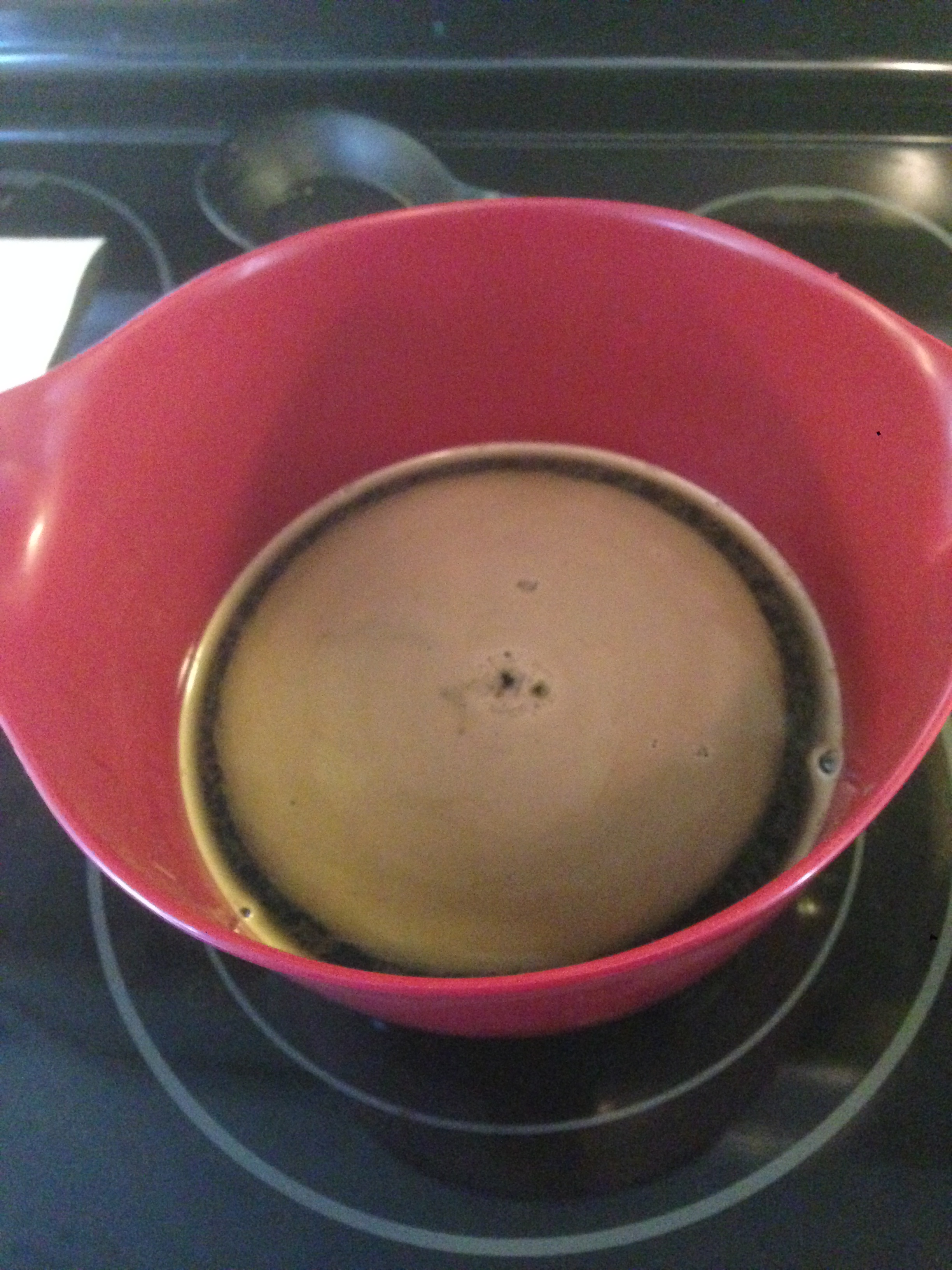
This is my lye and water mixture cooling down to 140

This is my lye and water mixture cooling down to 140

In the picture above, the water is dark brown because it was infused with Jewel Weed.  Your water will most likely be clear.  When your lye mixture is cooled to 140 and your oils have heated up to 160 you pour the lye in a steady stream into the oils, stirring constantly.

I invested in a stick blender because it is wonderful to help stir the soap for this next step, which is rather long.
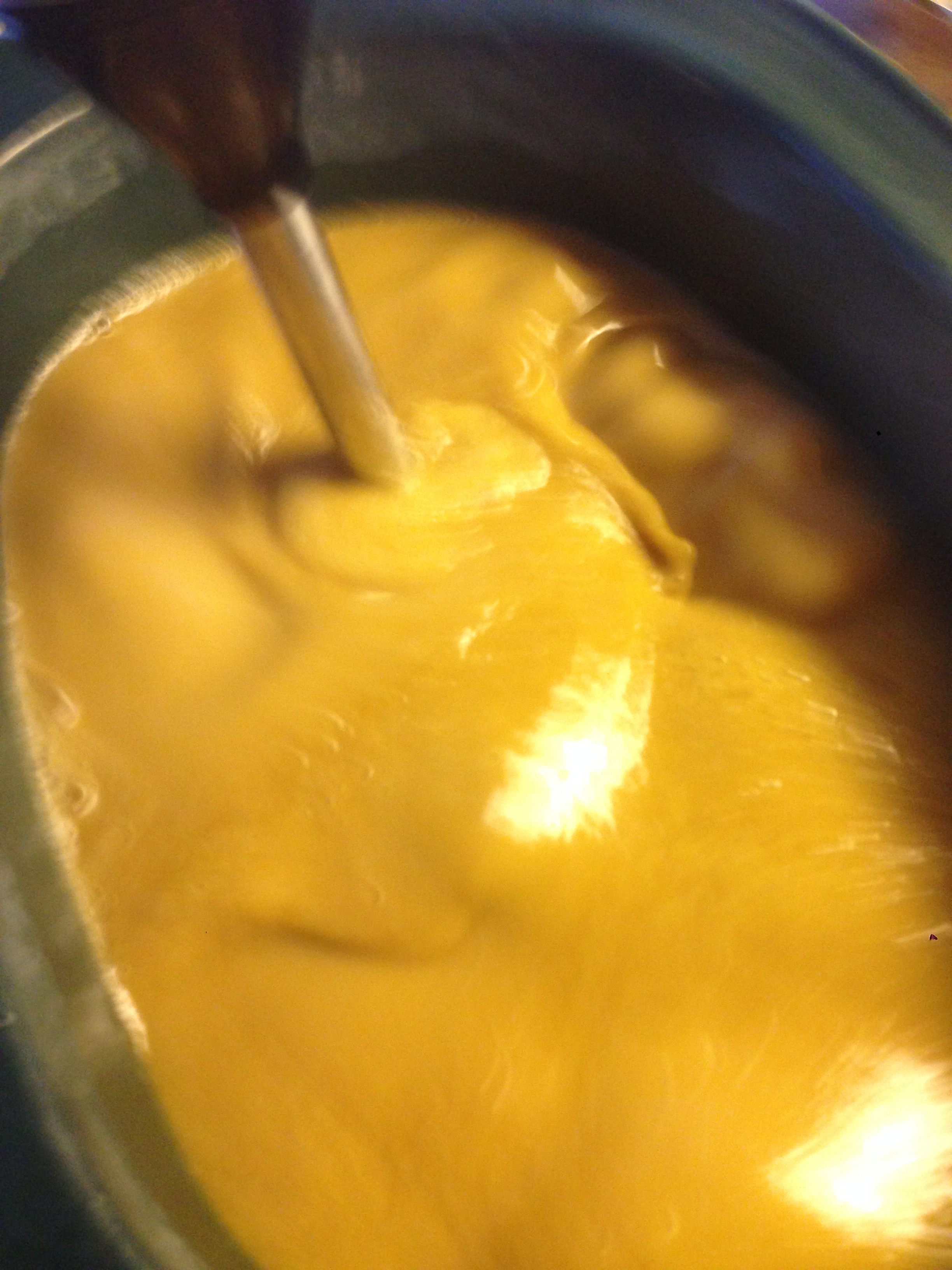
Here the soap has been cooking for a few minutes.  It starts out thin and will thicken to different stages while cooking

Here the soap has been cooking for a few minutes. It starts out thin and will thicken to different stages while cooking

The steps that your soap will go through are a thin liquid as they are coming together, then a taffy stage, a mashed potato stage and finally a stage that can hardly be stirred.  Below are pictures of each.  This process can take a couple of hours.  It’s not an exact amount of time between steps and that’s why the stick blender comes in handy as it really saves your arm.  I did burn one out though, so I use the blender for a few minutes than stir back and forth.

You can see here that the soap has changed a bit.  I call this the cream of wheat stage  :-)

You can see here that the soap has changed a bit. I call this the cream of wheat stage 🙂
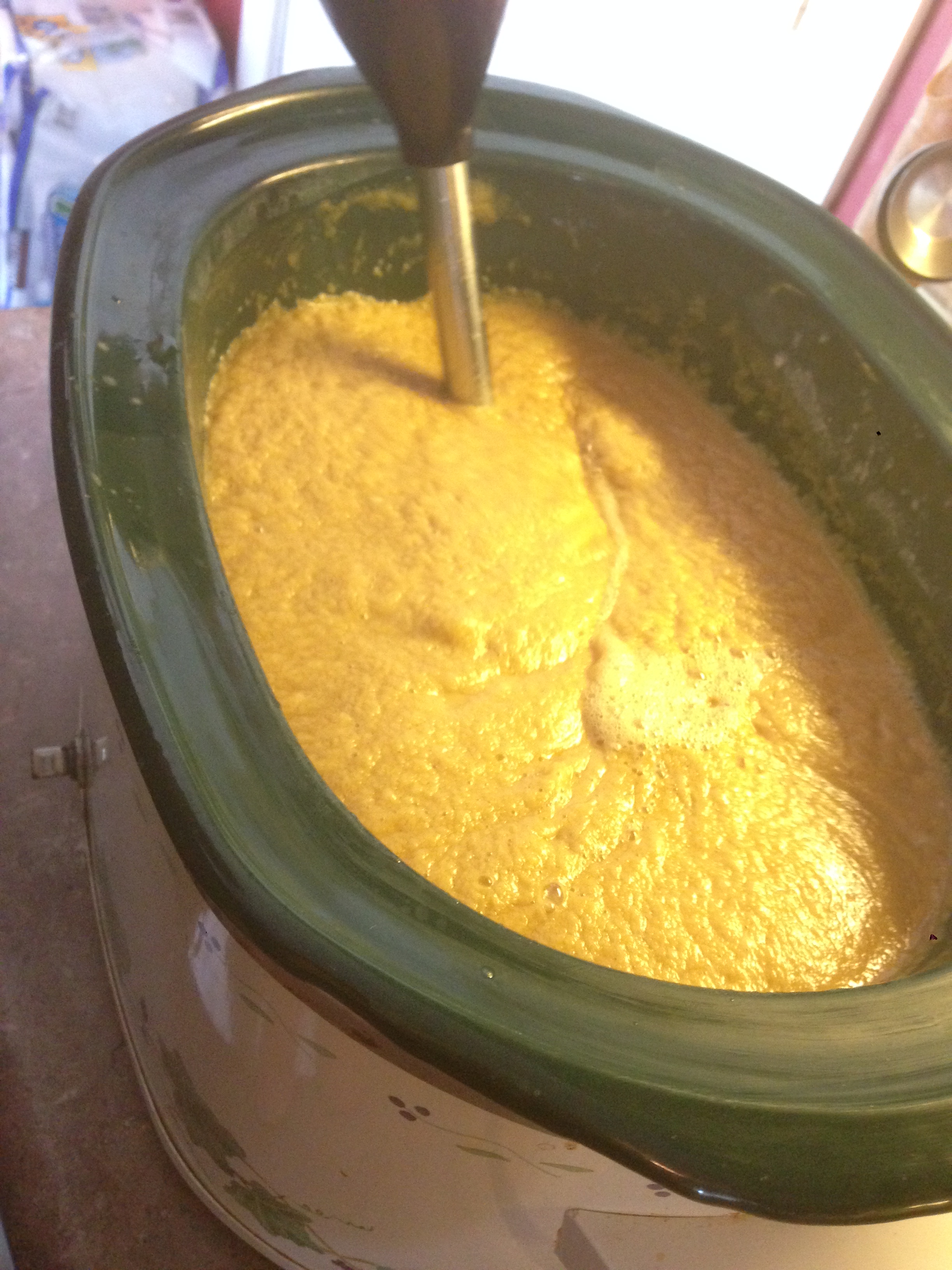
See how it is getting a little more grainy looking?
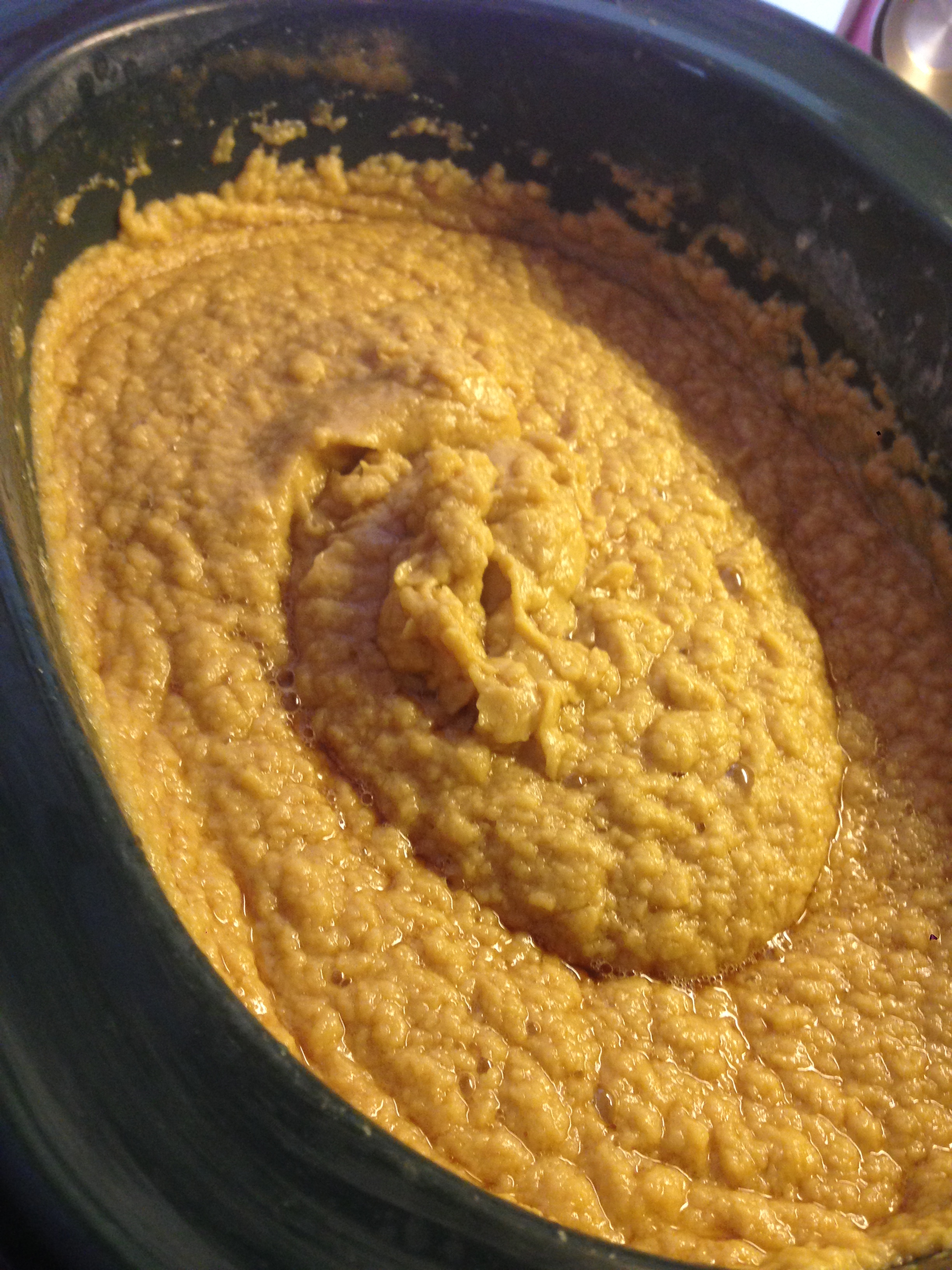
See how it is getting a little more grainy looking?

This is mashed potato stage
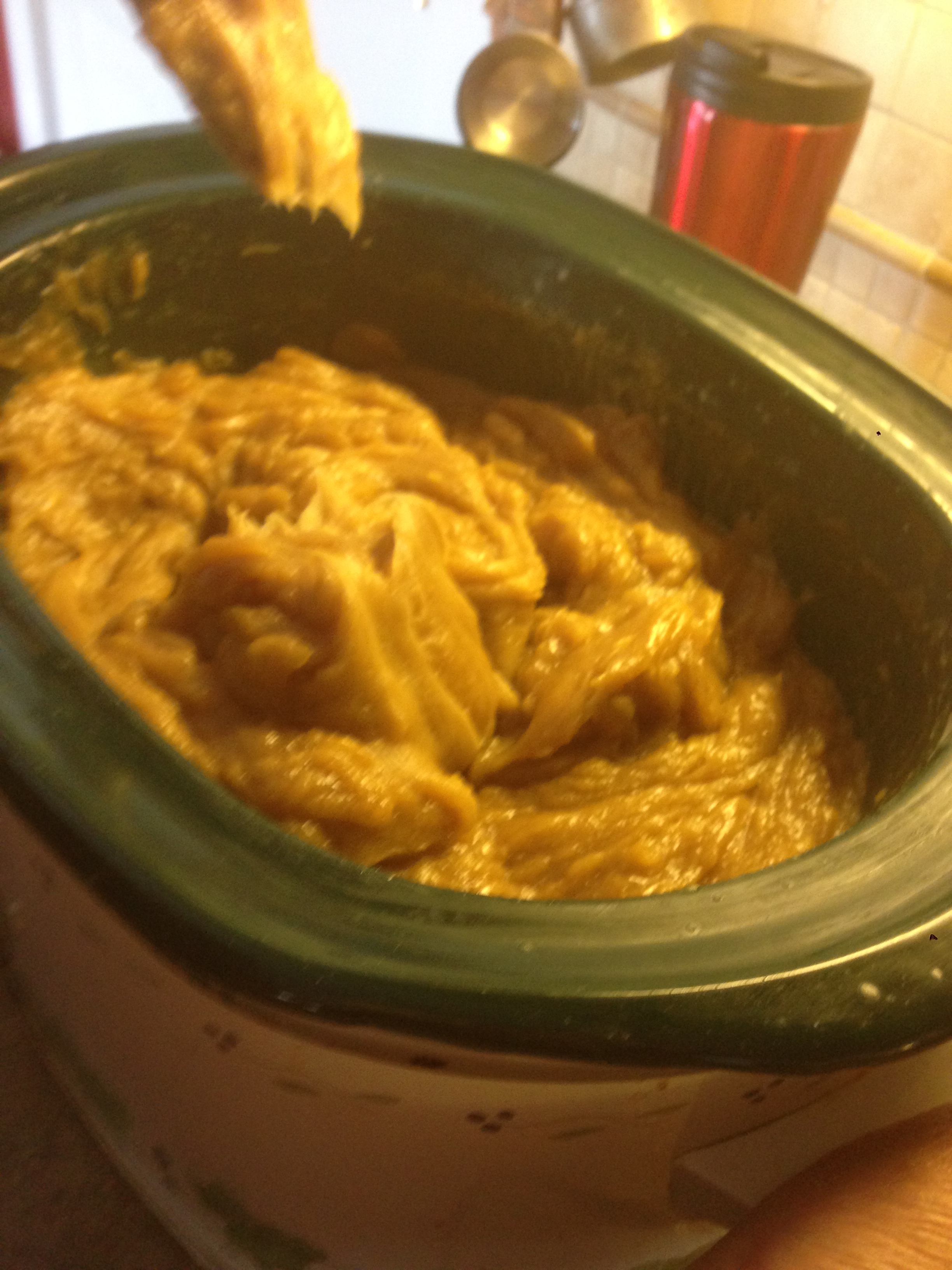
This is mashed potato stage

Now the paste is at a point where it is very difficult to stir.  Now the cooking begins.  Just put on the lid and check it every 30 minutes or so.

Now the paste is at a point where it is very difficult to stir. Now the cooking begins. Just put on the lid and check it every 30 minutes or so.
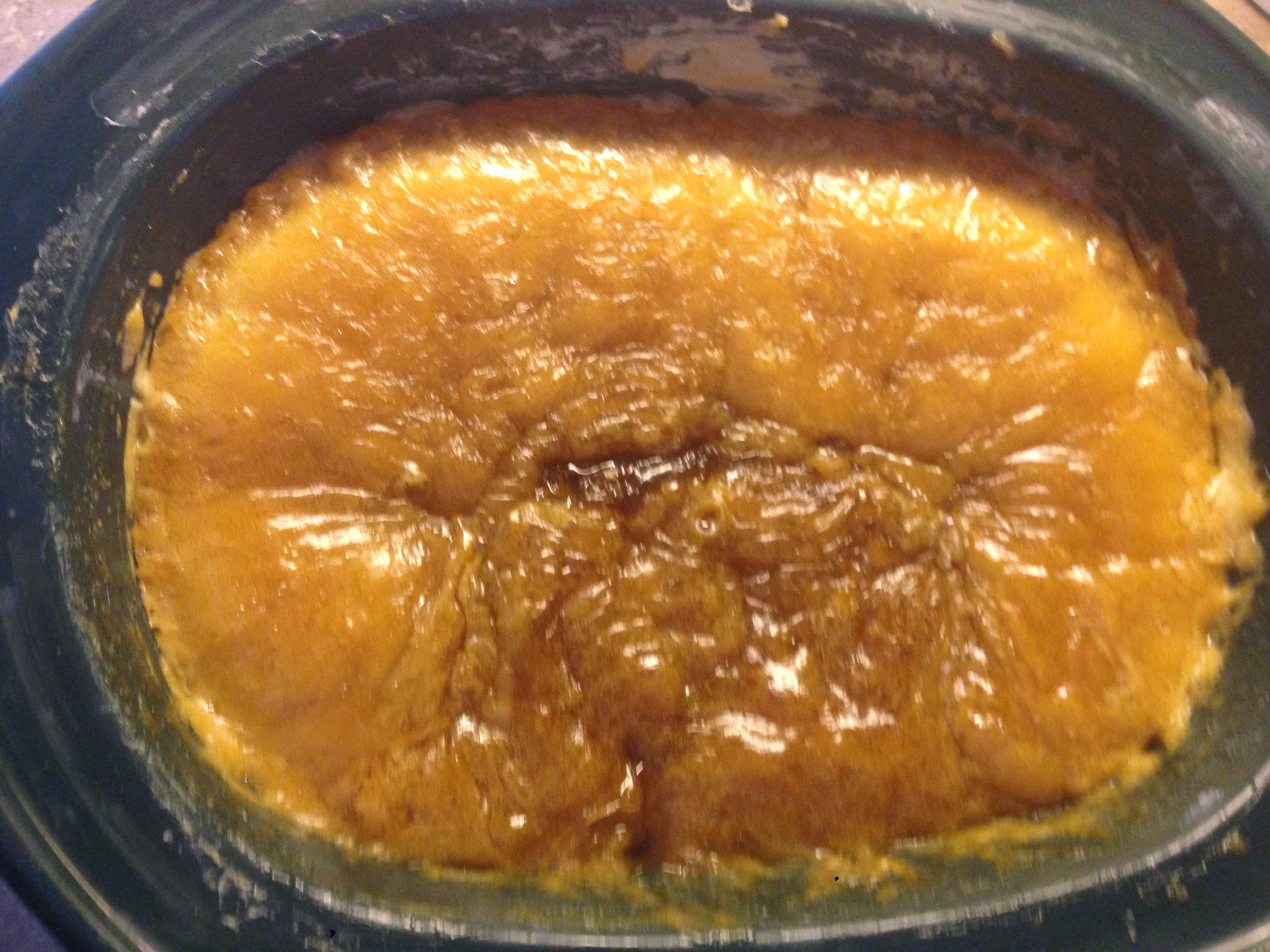
Here the soap has cooked for the first 30 minutes.  Take your stainless steel spoon and stir it very good.  Then just put the lid back on and check again in another 30 minutes.

Here the soap has cooked for the first 30 minutes. Take your stainless steel spoon and stir it very good. Then just put the lid back on and check again in another 30 minutes.
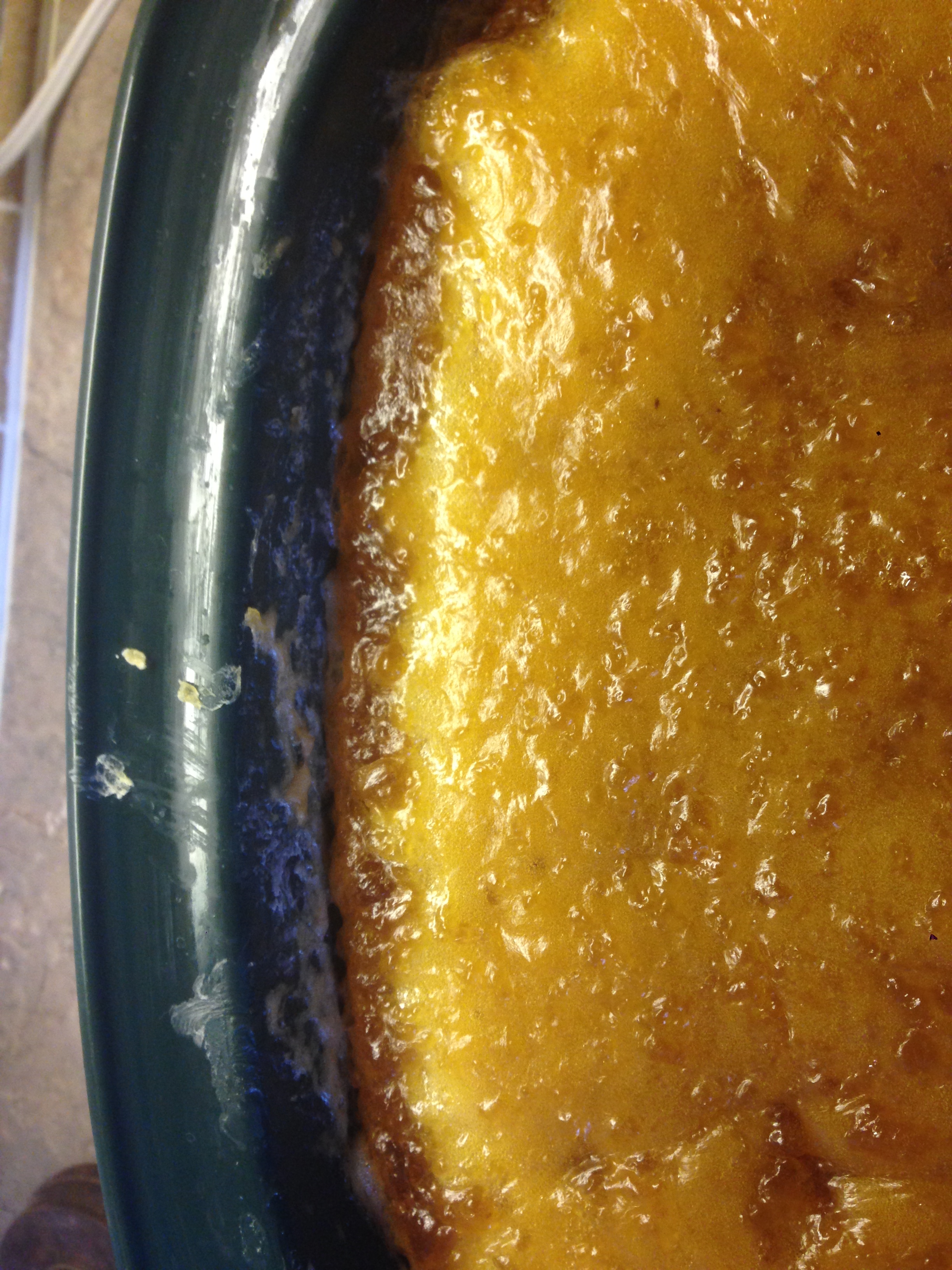
I added this close up picture to show you how the edge is getting translucent.  This is what your whole batch to finally get to.  This step could take hours.  I started cooking this paste around 10:30 AM and didn't finish until around 11 PM.

I added this close up picture to show you how the edge is getting translucent. This is what your whole batch to finally get to. This step could take hours. I started cooking this paste around 10:30 AM and didn’t finish until around 11 PM.
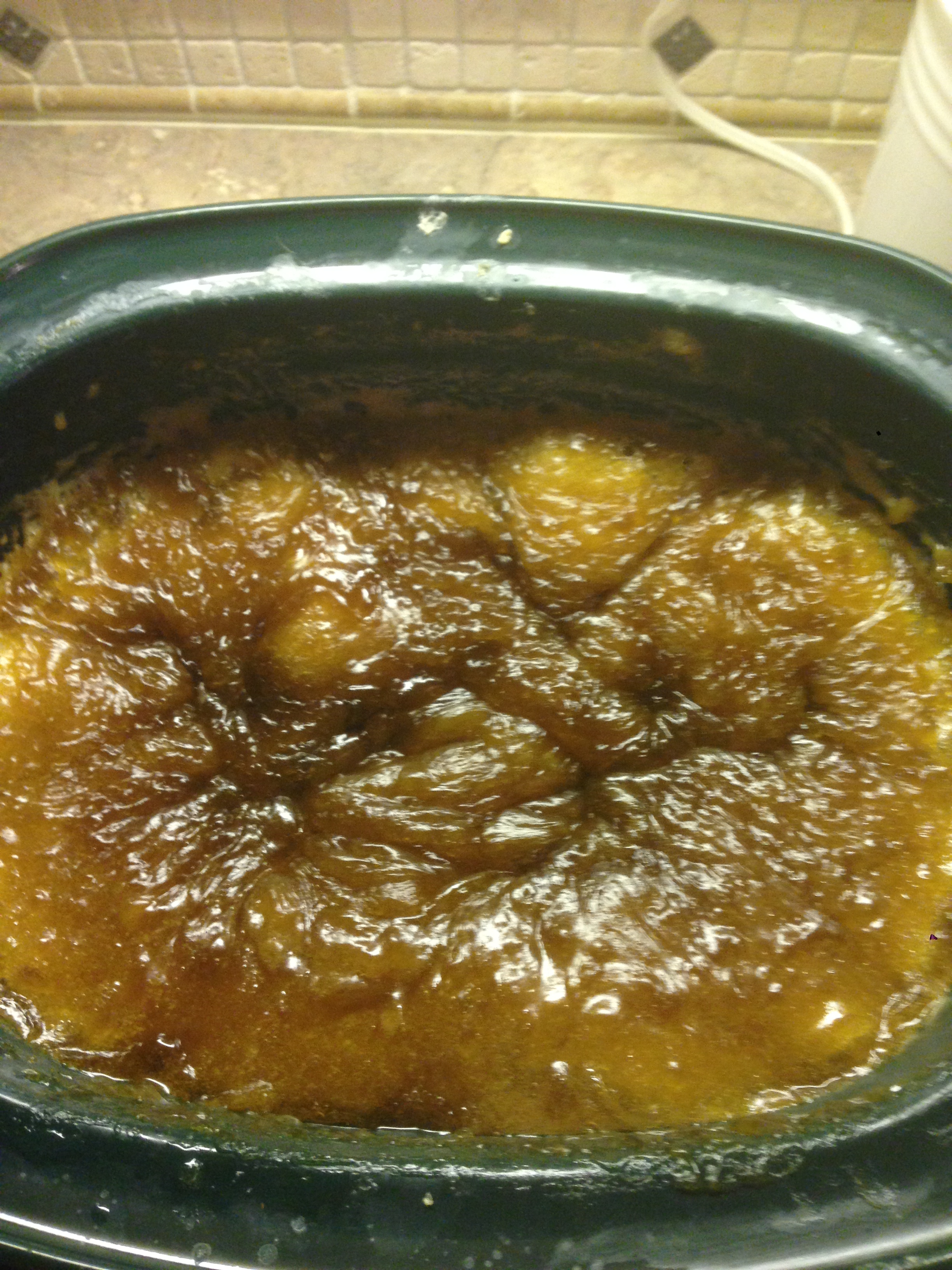
It's getting close....this is probably after 5 hours.

It’s getting close….this is probably after 5 hours.
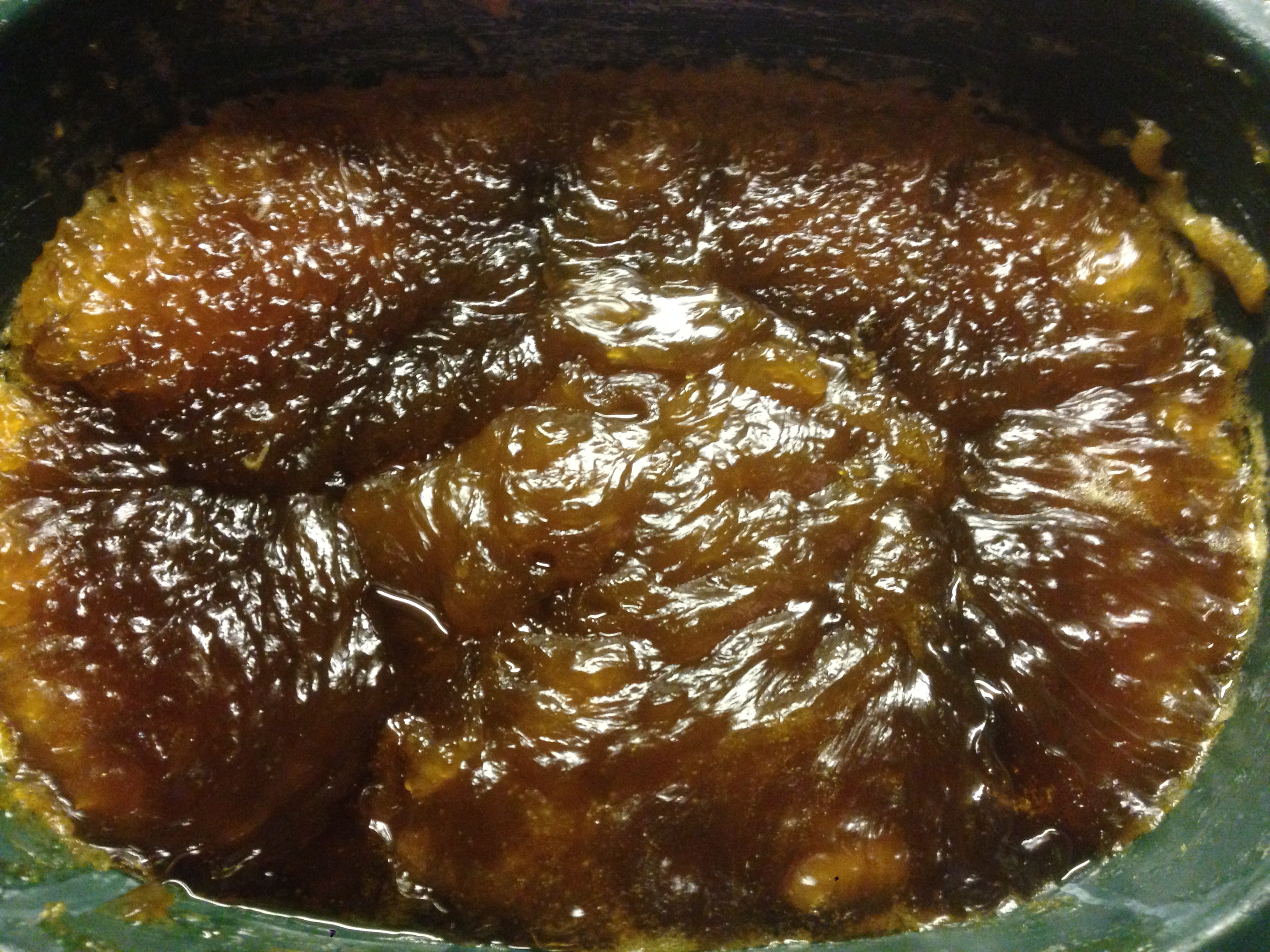
Just about done....I think I cooked this another 30 minutes.

Just about done….I think I cooked this another 30 minutes.

When your paste is done, you need to weigh it.  I take a bowl, and putting it on my kitchen scale, I set the scale back to zero.  Then place your soap paste in the bowl and weigh it.  The approximate measurements is 1 to 2 pounds of water (to dissolve the paste in) for every pound of soap.  This batch was 4 pounds 3.6 oz.
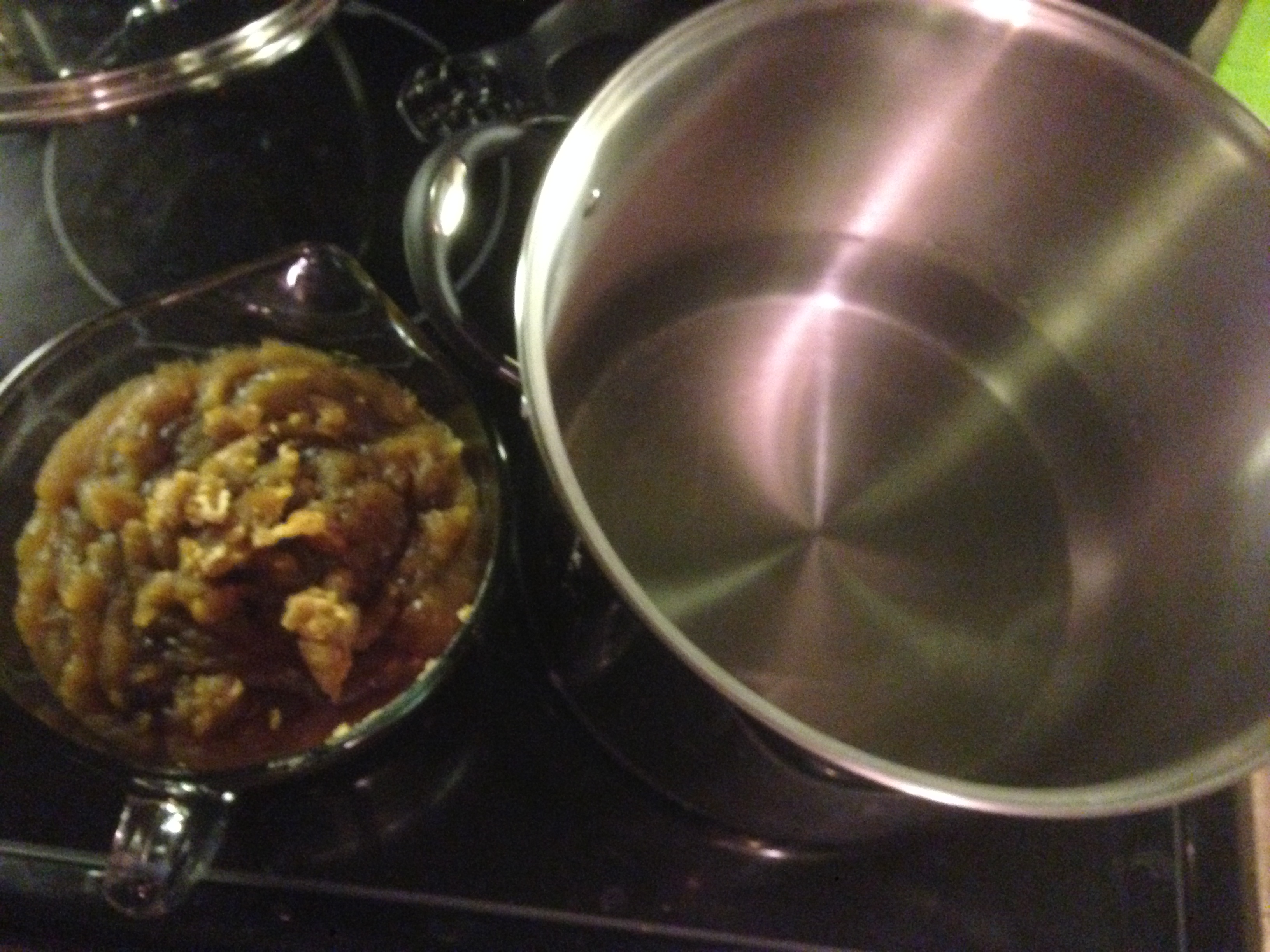
Here is the soap paste sitting next to my measured water in my large stock pot.

Here is the soap paste sitting next to my measured water in my large stock pot.

Turn the water on and let it heat up.  When the water is starting to boil, turn it down to a simmer and add the paste.  If you want, at this point you can just turn off the stove, leave the lid on and let the paste eventually dissolve.  That is what I did since this batch was done at 11 o’clock at night.  I went to bed  🙂

When your paste is dissolved, you will need to neutralize it.  I use cosmetic grade sodium borate for this since it’s a neutralizer AND a thickener.  This will turn your soap into a gel.  If you are making castile soap and not using it as a body wash, you can skip this step, but if you will be using it for shampoo or body wash you will want to neutralize it so the PH is not too high.  That can be drying to your skin.

To neutralize you add a sodium borate and water mixture to your hot soap.  If you left it over night, you can reheat it, pour in the correct amount based on your recipe, and stir.  You will see it visibly thicken as you stir.

The next step is to test the PH.  I used a PH strip for this batch, but I’m in the process of buying a PH meter for future batches.
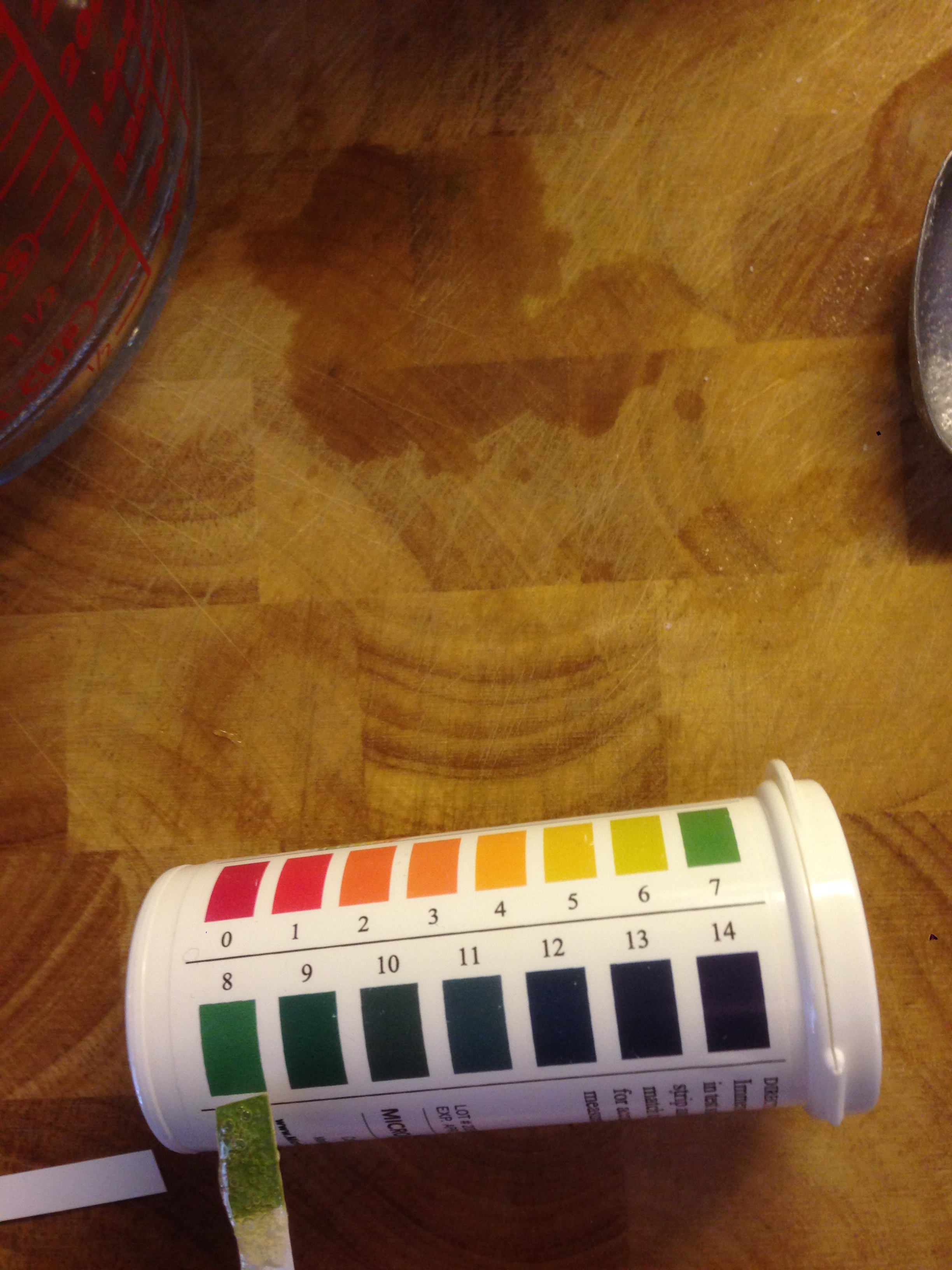
Some sites say PH strips are not completely accurate.  I have had no trouble, but if you use them you need to have a full spectrum strip that is shown here.  Like I said, a PH meter will be completely accurate.

Some sites say PH strips are not completely accurate. I have had no trouble, but if you use them you need to have a full spectrum strip that is shown here. Like I said, a PH meter will be completely accurate.

Here is my finished product.  Your soap will need to sequester for a few days.  I always use large mouth bottles because I’m not exactly sure how thick it will be when it cools.  It will always be a bit thicker when it has cooled off and I don’t want to put it into anything with a small opening and then not be able to get it back out.  I had a batch that was too thick once and I put it back into a pan with hot water and kept adding water until it was the consistency I wanted.  This soap, because of the Jewel Weed infusion is not clear.  The water was like a tea when I added it,  I also infused the oils for a couple of months, so this is a double infused jewel weed soap.
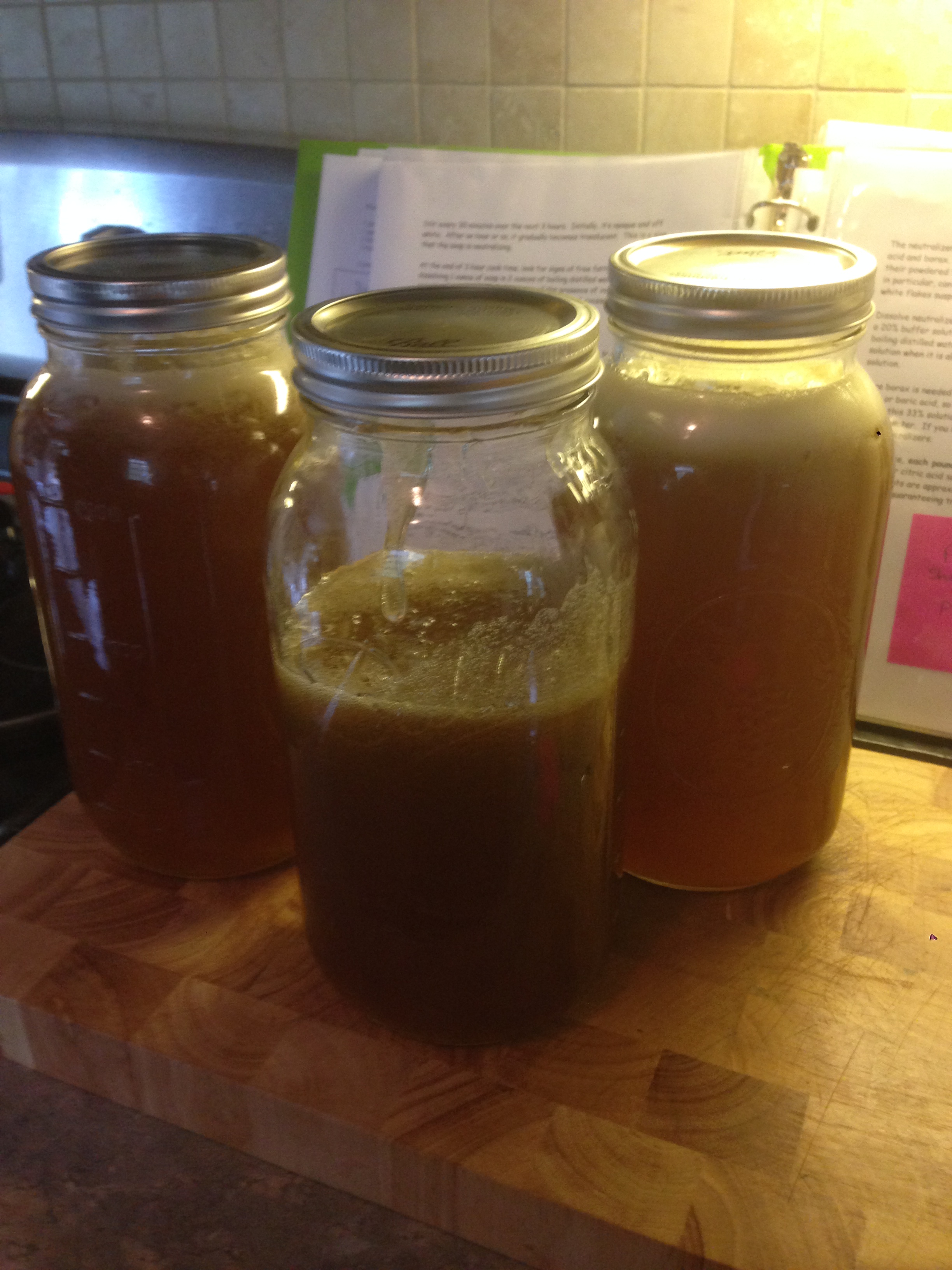
This soap was a little too think for my liking, so I diluted it with more water and ended up with over a gallon and a half of finished product.

This soap was a little too think for my liking, so I diluted it with more water and ended up with over a gallon and a half of finished product.

So that’s about it.  To make your own soap, you will need to find a recipe that you want to use and it will give you more specifics for your certain type.  This is only the general directions.  Good luck  🙂


How to make bone broth

I have been meaning to post this for a long time.  A friend recently reminded me that I still had not given the directions for making bone broth.  I determined then, that the next time I made it I would take pictures and put the directions up.  So….here goes  🙂

First I should give you a little background on why I started making bone broth and the benefits of consuming it and using it if you’re going to add any broth to your recipes.

Bone broth, or meat stock, as our grandmothers call it, is what they used to cook with.  They didn’t go open a can of broth to add to Sunday dinner.  They used every morsel of a piece of meat, even down to the bone.  They knew that there were minerals,  that our bodies needed, in the bone and cartilage of a chicken carcass or a joint bone of a cow.  When the food industry started doing all of the cooking for us, and we let them because it was SO MUCH EASIER, I don’t think we realized for a long time that the broth in the can wasn’t full of the same goodness as what you could make yourself.  But the food industry cuts corners.  They don’t want to take the time to simmer (for days) bones in a pan, so they add lots of salt, some MSG for flavor, and call it good.  And for a generation or two now, we’ve consumed it without a second thought.  But our generation, the baby boomers, are not a healthy lot.  Auto immune disorders are running rampant, at a much higher rate than previous generations.  Many people believe, and I tend to agree, that it’s the poor food quality, along with tons of environmental toxins, that contribute to this increased percentage of people with ailments.  Everything from arthritis to fibromyalgia and chronic fatigue, crohn’s, irritable bowel, and the list goes on and on and on.  They’re all auto immune disorders, an interesting dynamic where your body decides to attack itself…..great, huh??

Many people, and I also tend to agree, believe that if you give the body what it needs, our Father created us with the innate ability to begin healing.  He really did an amazing job when he created us  🙂    We’ve just gotten so far off track, that most of don’t know where to begin.

So when I started my journey learning about GAPS (because I have arthritis and was sick and tired of feeling sick and tired) one of the basic of this lifestyle is consuming bone broth…..and lots of it!  Bone broth contains valuable minerals in a form your body can easily absorb and use, including calcium, magnesium, phosphorus, silicon, sulfur chondroitin and glucosamine, now sold as expensive supplements for arthritis and joint pain and a variety of trace minerals.  And the best part….it’s readily absorbed right into the body. 

Bone broth is excellent for “healing and sealing” your gut, to use Dr. Natasha Campbell-McBride term. Dr. Campbell’s GAPS Nutritional Protocol, described in her book, Gut and Psychology Syndrome (GAPS), centers around the concept of “healing and sealing” your gut through your diet.

Broth or “stock” plays an important role as it’s easily digestible, helps heal the lining of your gut, and contains valuable nutrients. Abnormalities in your immune system are a common outcome of GAPS, and such immune abnormalities can then allow for the development of virtually any degenerative disease.  To read more about all the wonderful benefits of bone broth check out this link http://articles.mercola.com/sites/articles/archive/2013/12/16/bone-broth-benefits.aspx

So that is how I got started…..I have been doing GAPS for about a year and a half and bone broth is a basic.  I’ll admit, I was pretty overwhelmed the first time I made a batch, but there is absolutely no reason for it.  It’s so easy, and if you make a large batch it will last for quite a while if you freeze half.

I’m not sure what the pot size is that I use, but it will easily hold 2 gallons.  I don’t fill it that full, and depending on the amount of bones I use, I might use a crock pot.  The first step is to fill your pan with fresh filtered water.  If you are using the carcass of a chicken or turkey, just dump the bones, skin, giblets if you have them, neck pieces…even feet if you have them.  I’ve never used any feet, because I’ve never acquired any, but if I can if the future, believe me, they’ll be in there  🙂  I also use a beef bone in my pot because I want the extra goodness and we have a freezer full of them.  For local people, here is the place I get my bones from.  They are from grass fed beef and their butcher cuts the bones into a nice size.

Adding filtered water to the pot with a chicken carcass.

My local source for grass fed beef and bones

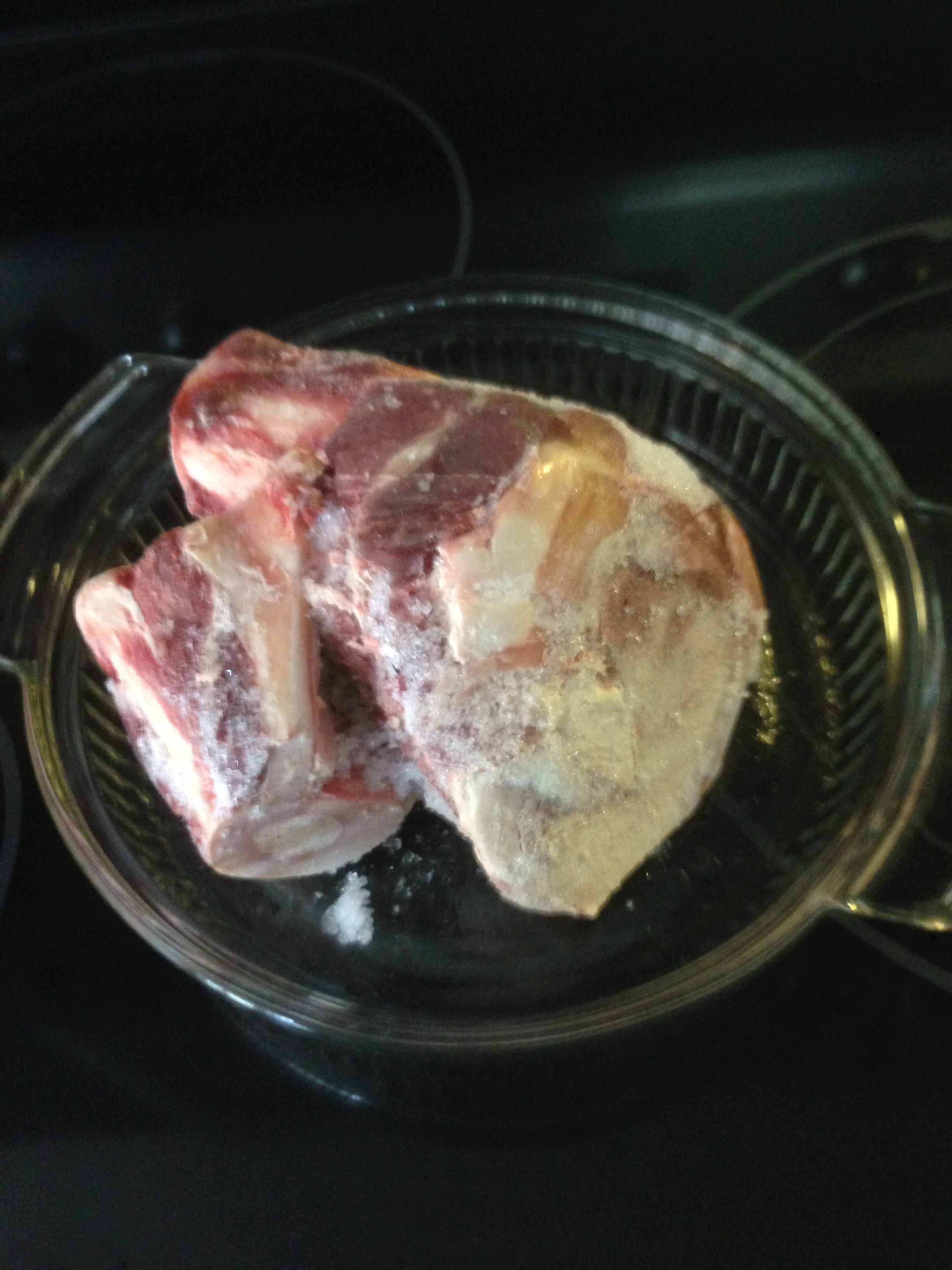
Next (if I’m using a beef bone) I put it in a dish and brown it under the broiler for a few minutes until it’s lost the pinkness.

bone ready to put into the broilerThese bones are ready to be broiled.

It actually adds flavor to your broth.  If you are not using a beef bone, disregard this step.  Then you’ll want to add a couple of Tablespoons (even up to 1/4 cup) of apple cider vinegar.  Make sure you use a good quality vinegar with the “mother” not the processed grocery store variety.making bone broth 004Adding the Vinegar

Here is a good brandThis is the kind I use.

Then add salt (and pepper if you want). Turn the burner on and when it begins to boil, turn it down to a simmer, put on the lid and let it cook. For just poultry bones you cook it for 24 hours. For beef bones you cook it for 2-3 days. With the broth I’m making here, I have both poultry bones AND beef bones, so after 24 hours I will take out the chicken bones and leave the beef bones to cook for another 2 days. If you have gas heat, I realize you will not want to leave your stove on overnight. In that case I would always use a crock pot.

Some people, on the last day of cooking, will add garlic cloves, onion, celery, carrots etc and all of those things are good and do add some extra flavor and vitamins etc.  I just have a really hard time cooking and throwing away veggies, and they are cooked to death when you are done.  I don’t add those things, because I use the broth in recipes and soups and I add all of my veggies there.  You can do either, and it’s just fine either way.  My goal is to get the goodness from the bones, and add my veggies with my meal.

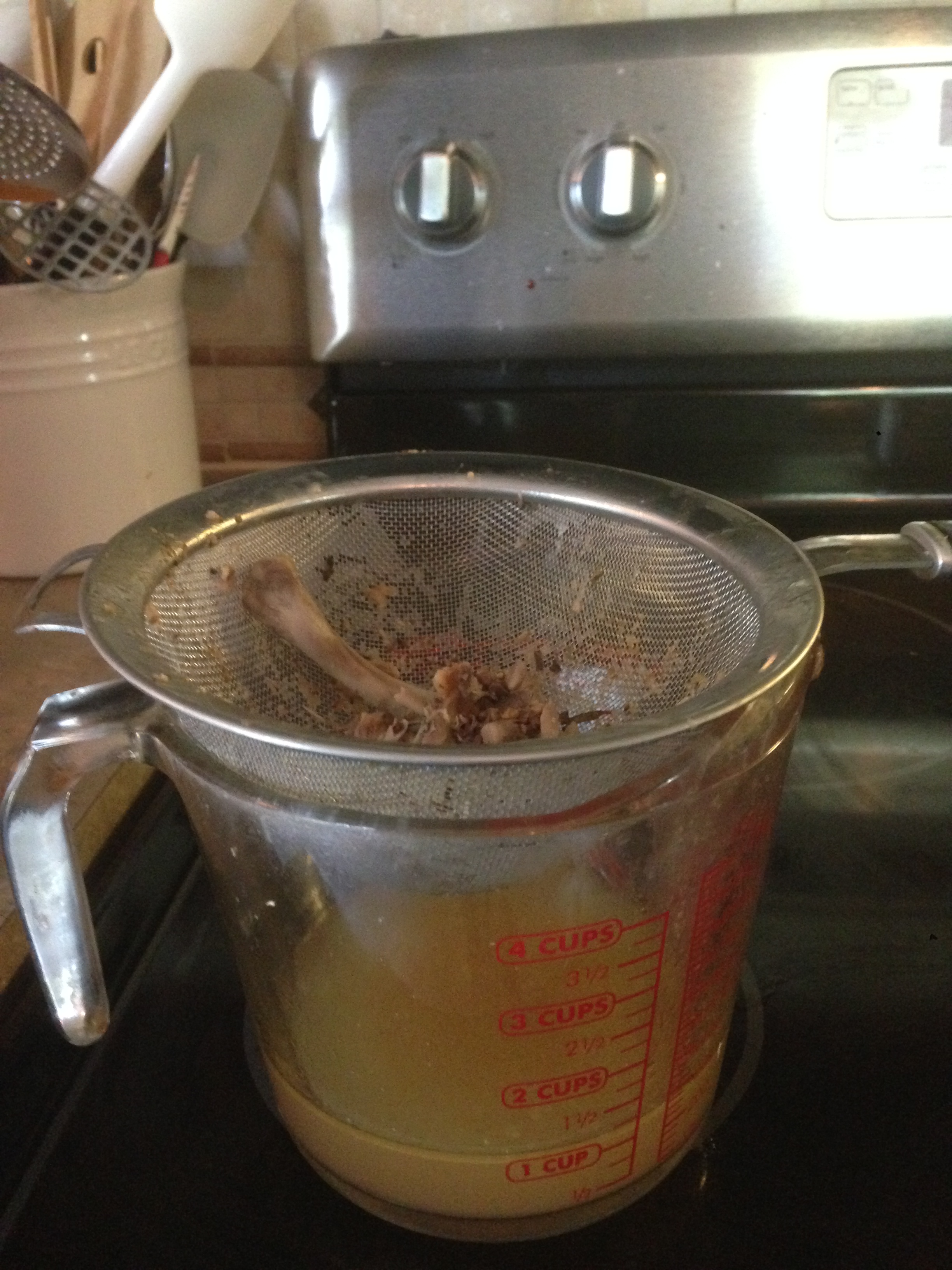
This next step is kind of messy (sort of like de-boning a chicken which is not my favorite task.  I don’t like getting all greasy, but I do it anyway…..)  I let the broth cool a bit, and when it’s warm I take a metal strainer (not your good nylon strainer that you use in ferments…..they will melt).  Put the strainer over a large measuring cup and ladle the broth through the strainer.  The strainer catches all of the bones and such to be thrown away.  Then pour the broth into quart or half gallon jars.  If you are going to freeze part of your broth do NOT use half gallon jars.  We have broken several….they don’t seem to handle the freezer well.  Fill your quart sized jars up about 3/4 way up, leaving plenty of room for expansion when it freezes.  Glass will crack in the freezer if your jars are too full.  The pics below I am not planning to freeze, so I have them filled clear to the top.

Straining the brothStraining the bones out

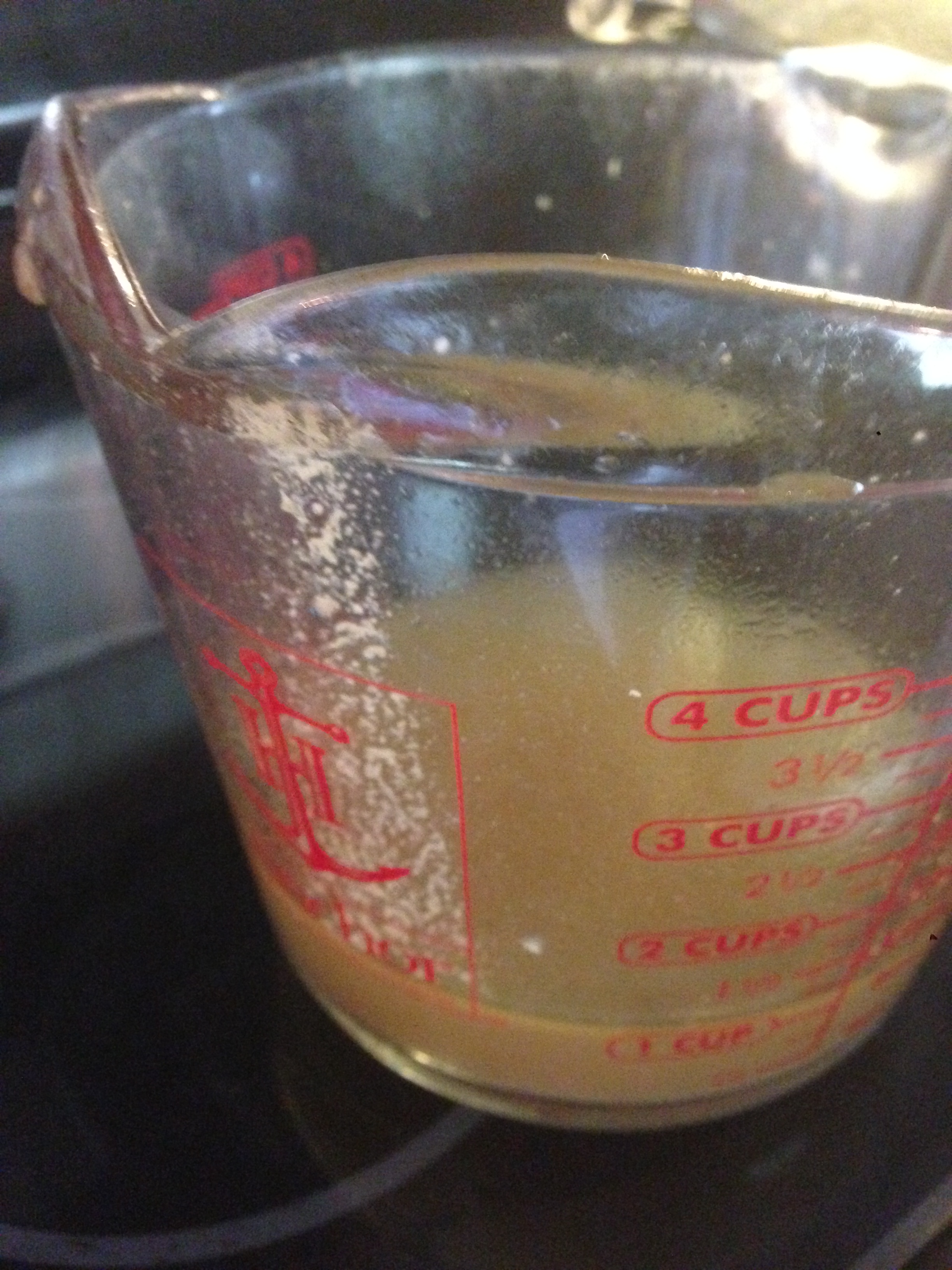
The sediment on the side of the measuring cup is literally bone that has dissolved into the broth.  You can not taste it in your cooking but it's SO good for you.See this sediment.  This is literally bone that has disintegrated into the broth.  This is part of the reason it’s so full of minerals.

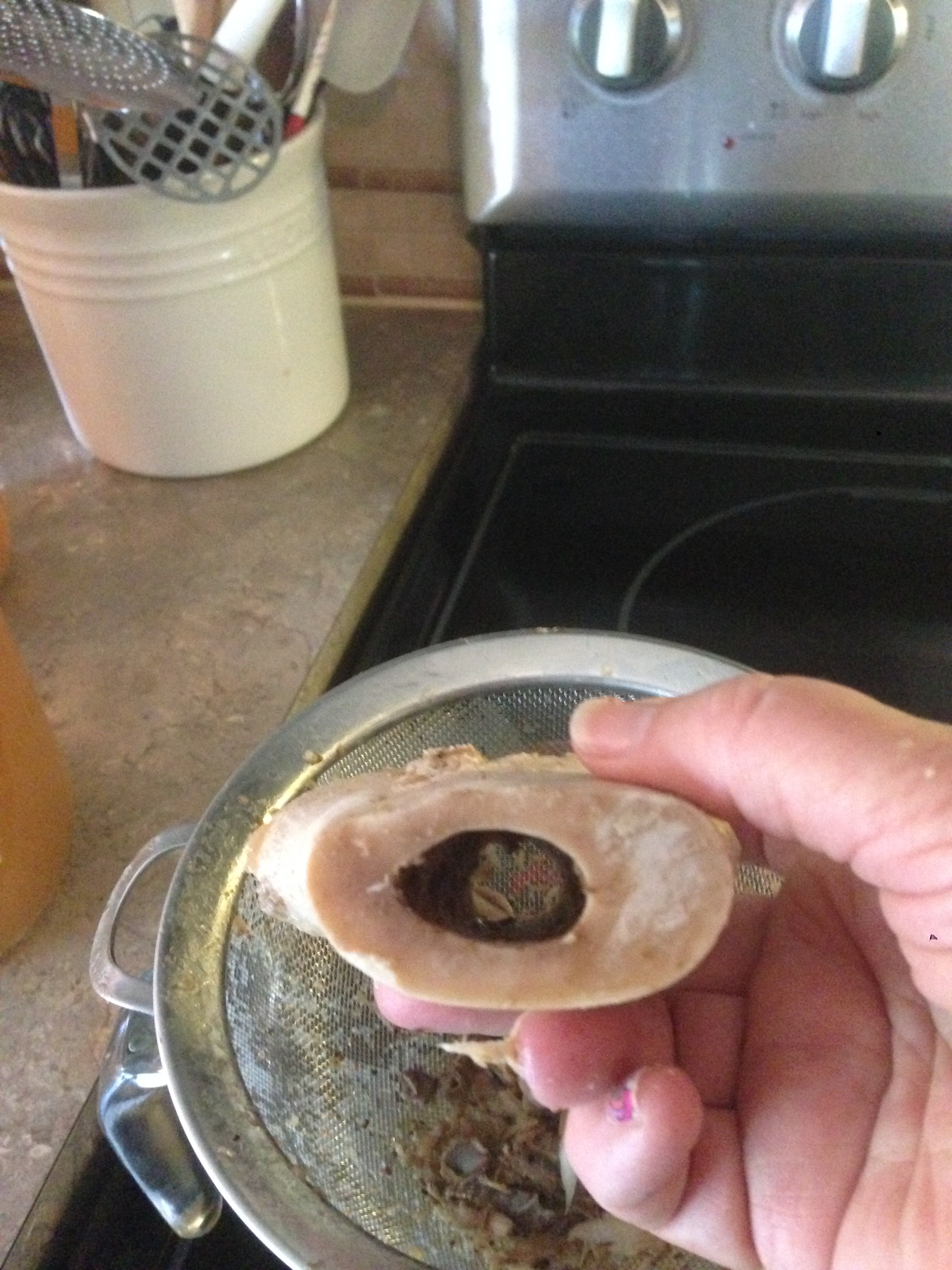
As you can see, the marrow has been completely cooked from this bone, as well as all cartilege that was on it in the beginning. Where the marrow was…

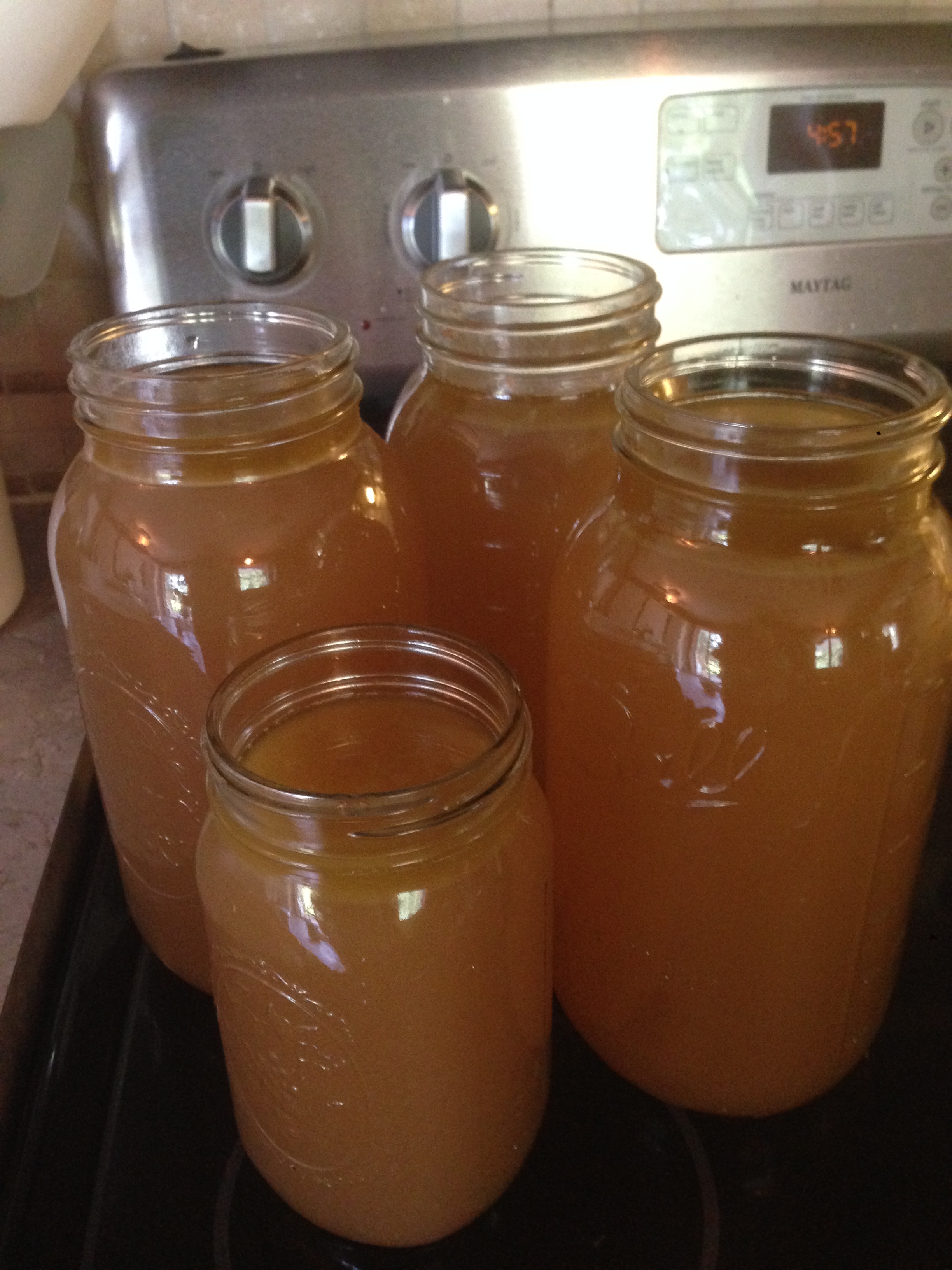
Here are my jars cooling and getting ready to put in the fridge.

The marrow had to be tapped out of the bone up above. You will see it as a gelatenous mass (think of what a roast bone looks like when it’s been baked). You tap in out, mash it up and you can add it to the broth. If you look closely you can probably see some floating in the top of the jars. I always use it because it is so healthy for you.

That’s pretty much it.  Your stock is ready to go.  You can use it to make soup or add it to casseroles instead of water in a recipe.  You can heat up a cup and drink it.  Sometimes when I do that I will add a few spices…..whatever I’m hungry for at the time.

You can Google bone broth and read all kinds of information about it.  Here are a few more links if you want to know more

http://www.naturalnews.com/040493_bone_broth_immune_health_nutrients.html

http://doctorauer.com/benefits-of-bone-broth/

And here is an article of GAPS if you want to know more about it.

http://products.mercola.com/gaps-diet/

It’s been awhile

It has been quite a few months since I’ve posted anything. Most of 2013 was spent on me focusing on me. Not in a self centered way, but in a healing way. I started my healing journey the 1st week of January and let me tell you….it was tough….and discouraging….and I went through withdrawal from sugar and wheat and indulgence and so on and so on and so on. I was looking for quick results (that didn’t come as quick as I wanted) but I kept plugging away. I Googled other people’s journeys looking for signs that I was on the right track. The GAPS book was written for people with Autism, or ADHD or other issues in that realm. The book touched on Physical issues like Arthritis and other auto-immune disorders, but 99.9% of the book gave signs and symptoms for the mental and emotional disorder realm. So I wasn’t able to go back to the book for a reference point that I was, indeed, on the right path, so I used other people’s blogs to see how things had gone for them, to see if any of it applied to me. Sometimes I would find something that would encourage me.

But I didn’t give up. I did have a few mess-ups. Like in April when I went to St. Louis grocery shopping on an empty stomach without even a bag of trail mix to munch on. Bad idea……I went into Costco, and over to the food area where they were giving away all those tasty little samples. I had a piece of Salami on a cracker (Wheat) and then a couple of Peanut Butter Cups (sugar and who knows what all else) and then went on my way, feeling guilty but at least I wasn’t as hungry as I was earlier. Well, the next day I felt like CRAP!! I hurt all over my whole body, with nerve pain going down one leg and both of my knees screaming at me. UGH…..That was my first realization that yes, I was on the right path. I felt crummy for a couple of days more and then it went away. WOW!!!! What a wake up call that was. I saw, with my own physical body, that food was affecting me and when I made bad choices my body told me all about it. It actually screamed at me to cool it 🙂

A couple of months later we had a pot luck at our church. Greg and I had not been going because it was just too hard to find anything I could eat, but that day I planned for it by taking a desert that I had made (that was legal) and a green bean salad that I knew I could eat. But the only other item I had was a piece of fried chicken with the skin peeled off. BUT, the next day I felt bad, not as bad as the first time, but significantly more painful. That was my second test and my body told me, “Yep….you need to cool it”. At least this time it didn’t scream at me, it just grumbled a lot.

Greg and I went on vacation in September and I spent a couple of months researching what type of food I could easily take on a trip. I bought a Excalliber Dehydrator and I was dehydrating up a storm. I made Beef Jerky, Zucchini chips (that I could dip into yummy guacamole), I made crackers out of sunflower seeds and pumpkin seeds then baked into crispy disks…..so good. I had them with cheese. I baked a coffee cake out of almond flour and became VERY good at taking a cooler with those wonderful plastic ice packs that never melt all over your food and get everything soggy. Man, it’s easier than ever to take food with you for even a week at a time. Greg got really good at helping me everyday change out the ice packs from my big cooler (it was full of dry ice and I would change out the melted ice packs for frozen ones everyday). It worked great!! We only bought dry ice once on the road and I had my own healthy food for 2 meals a day. Then we ate out our evening meal where I had meat and veggies. I took my double fermented Kombucha, and milk kefir and fermented veggies. I made sure to have some of them every day. I was amazed at how easy it was. And it sure came in handy, because then show season started in September as well. I used the same cooler method with the ice packs and just made sure we stayed in Candlewood Suites all over the place. The ice packs would keep my food ice cold on the travels (like Wichita, and Rogers Arkansas etc.) and then Candlewood Suites have full kitchens. I would refrigerate all my food, and then with the help of a smaller cooler that I could take to the booth with all my own food, AND thermos’s for soup and coffee, I was all set. I didn’t have to buy food out one single time. Man….think of all the money I saved, and I didn’t sabotage my efforts for health one time 🙂

Then about November I started realizing that I didn’t hurt anymore. My knees weren’t complaining when I went up and down stairs. I was sleeping better at night, not tossing and turning all night long. I look back now and I would have to say I’m 85% better than I was in January of 2013. I’m actually feeling good, and it’s been a LONG time since I could say that.

I’ve got a lot more to say, but for the sake of time, (I have swaddling blankets that need to be finished up for an order), and Downton Abbey is going to be on in a little while….if you don’t watch it, check it out. You can watch the first couple of seasons on NetFlix, and then on Masterpiece Theater on PBS for the current season. It’s a good show 🙂

I’ll be posting soon about the cracker recipe and some of the other dishes I’ve made this year that I feel warrant sharing. I can honestly say I don’t feel deprived at all. I am completely content in what I’m doing…I know it must be God. I don’t have that much discipline on my own. I’m thankful that he gave me the word through a friend in the Vineyard church a few years back saying to “Make food my medicine” because that’s what this last year has been….and it’s been good.

The Benefits and Brewing of Kombucha

Kombucha 1

Many people have been asking what Kombucha is and how you make it. Today I am going to show a picture tutorial giving step by step instructions on how to make this health-benefiting and tasty drink.

Kombucha is a fermented tea beverage that the ancient Chinese called the “Immortal Health Elixir”. It’s been around for more than 2,000 years and has a rich anecdotal history of health benefits like preventing and fighting cancer, arthritis, and other degenerative diseases.

This drink is made from sweetened tea that’s been fermented by a symbiotic colony of bacteria and yeast (a SCOBY for short). Kombucha didn’t gain prominence in the West until recently even though it’s health benefits have been known by the Chinese and other cultures for centuries.

In the first half of the 20th century, extensive scientific research was done on Kombucha’s health benefits in Russia and Germany, mostly because of a push to find a cure for rising cancer rates. Russian scientists discovered that entire regions of their vast country were seemingly immune to cancer and hypothesized that kombucha, that they called “tea kvass” there, was the cause. They began a series of experiments which not only verified the hypothesis, but began to pinpoint exactly what it was within kombucha that was so beneficial.

German scientists picked up on this research and continued it in their own direction. Then, with the onset of the Cold War, research and development diverted to other fields. It was only in the 1990’s, when Kombucha first came to the U.S., that the West started any studies on the effects of Kombucha, and those were few in number. As is typically the case in the U.S., no major medical studies are being done on Kombucha because no one in the drug industry stands to profit from researching a beverage that the average consumer can make for as little as 50 cents a gallon.

Regardless of the “lack” of scientific evidence, the fact remains that this beverage has 2,000 plus years of tradition behind it.

One benefit of Komucha is detoxification. Detoxification produces healthy livers and aids in cancer prevention. One of Kombucha’s greatest health benefits is its ability to detox the body. It is rich in many of the enzymes and bacterial acids your body produces and/or uses to detox your system, thus reducing your pancreatic load and easing the burden on your liver.

Kombucha contains glucosamines, a strong preventive and treatment for all forms of arthritis. Glucosamines increase synovial hyaluronic acid production. Hyaluronic acid functions physiologically to aid preservation of cartilage structure and prevent arthritic pain, with relief comparable to NSAID’s. Hyaluronic acid enables connective tissue to bind moisture thousands of times its weight and maintains tissue structure, moisture, lubrication and flexibility and lessens free radical damage.

Because it’s naturally fermented with a living colony of bacteria and yeast, Kombucha is a probiotic beverage. There’s a myriad of benefits such as improved digestion, fighting candida overgrowth, mental clarity, and mood stability. As such, people say it’s noted for reducing or eliminating the symptoms of fibromyalgia, depression, anxiety, etc.

I became interested in the many different forms of probiotic foods and drink because of arthritis. As you probably already know from prior posts, I’ve learned that leaky gut syndrome and poor gut health has been said to be the foundational cause of this and other auto-immune disorders. So, I got online, bought a scoby and when it arrived I made my first batch of Kombucha.

I have to admit, I’ve learned a LOT since I’ve been brewing this tea. I’ve learned what makes for a more palatable drink and I’d like to share those thoughts with you.

Now I’ll show you how to make Kombucha.

Here is the recipe I use:

1 gallon (or larger) glass container
3 quarts of purified water (no chlorine)
1 cup of sugar (no artificial sweeteners)
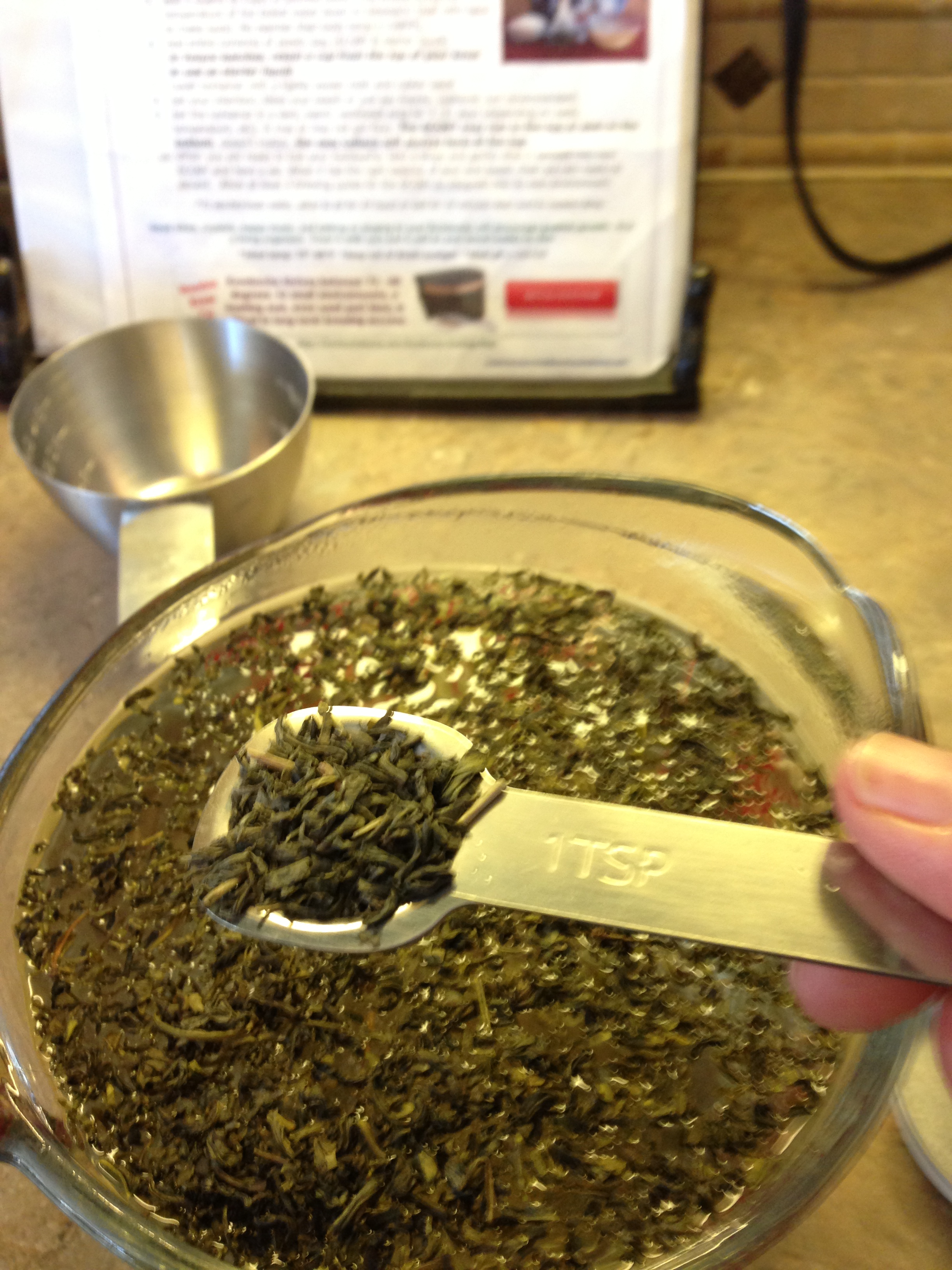
4-5 tea bags or 4-5 teaspoons of loose tea ( I like a mix of green and black tea)
1-2 cups of starter liquid (more about this in the blog)
1 Scoby
cloth cover and rubber band

making kombucha 1

These are the items you will need to make your Kombucha. I like to use both green and black tea. I think the taste is better, and from what I’ve read, it’s good for the scoby to have both types of tea, but I know others who only use black tea and like what they make.

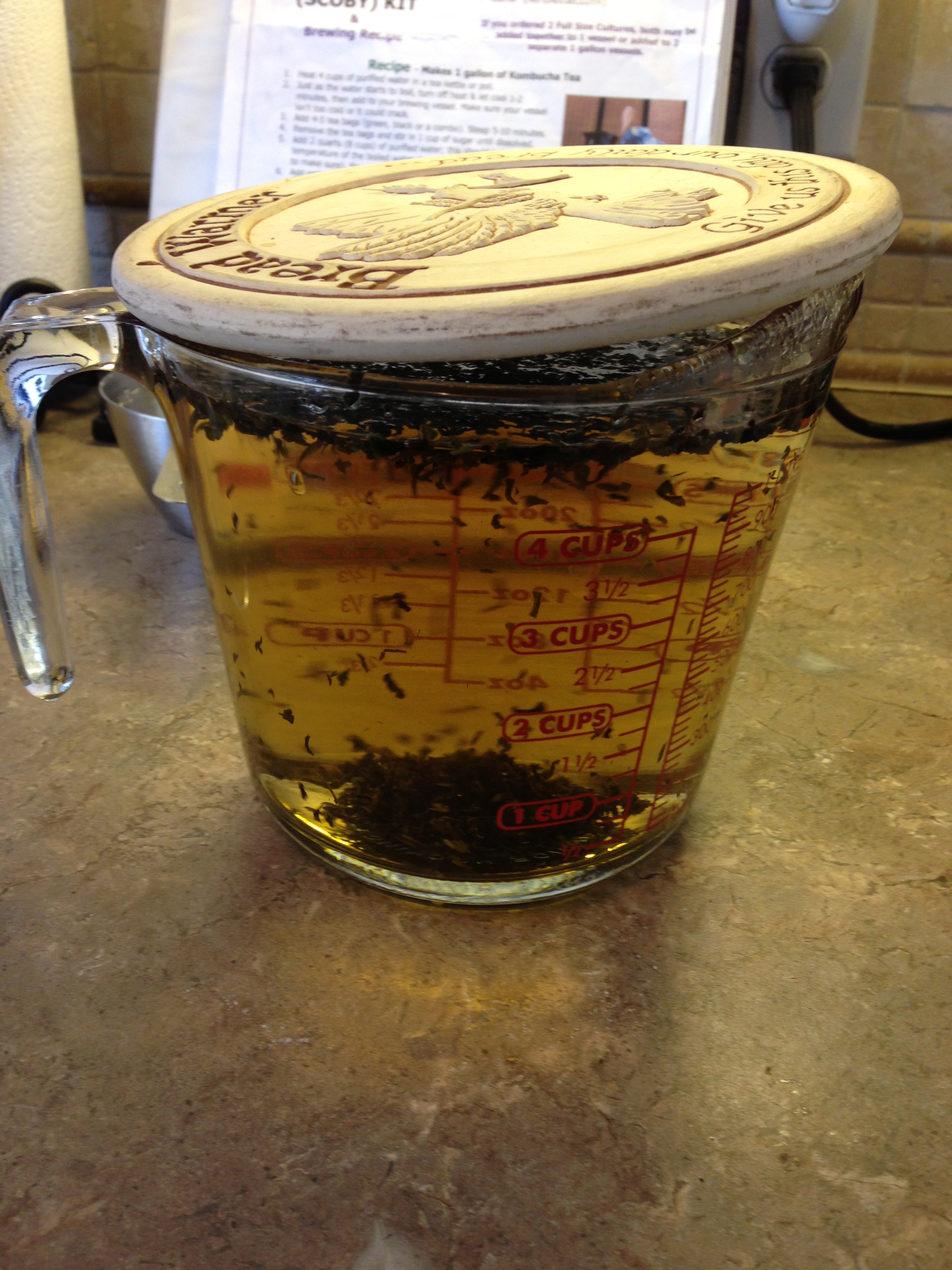
You boil 1 quart of water and place 5 tsp. of tea into the hot water, along with 1 cup of sugar.

making kombucha 2

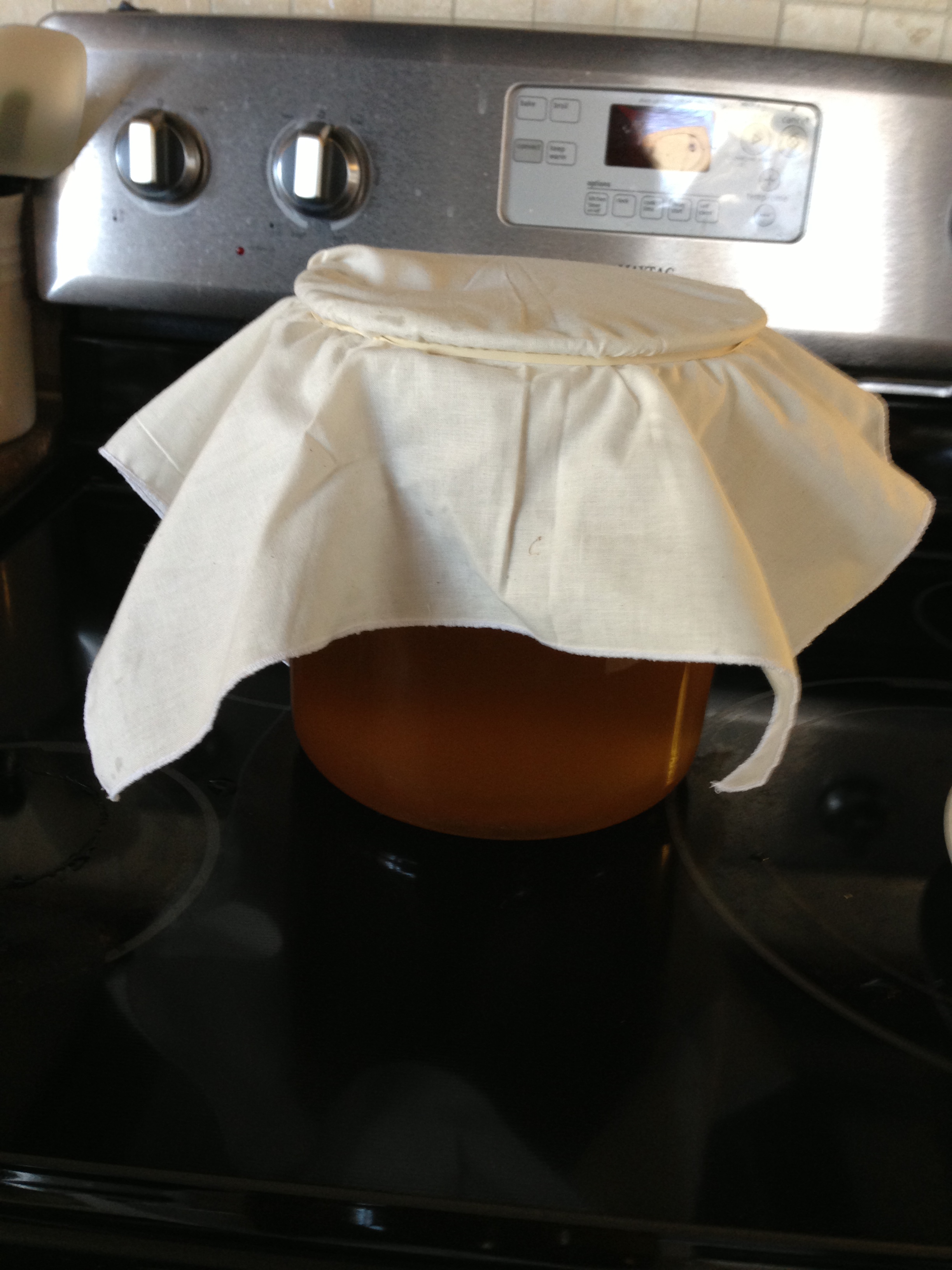
Then you cover your tea to brew.

making kombucha 3

Because you can’t put your scoby into hot water, sometimes I do this step the night before because I’m a multi-tasker and don’t like to waste time waiting…. 😉 ) When I wake up in the morning the tea is cooled to room temperature and I proceed. If you want to finish up the project all in one day, just wait for your water to cool down, or after 10 minutes of steeping your tea, you can strain your tea, add 2.5 – 3 more quarts of water and it will cool down to warm. For this tutorial, I waited about an hour before I proceeded.

Here you can see the tea has brewed and I’m ready for the next step.

making kombucha 4

I bought my glass canister from Target to make my Kombucha. The one pictured is 1 gallon. The one I actually use is way larger, either 3 or 5 gallons. You don’t need a container that large though.

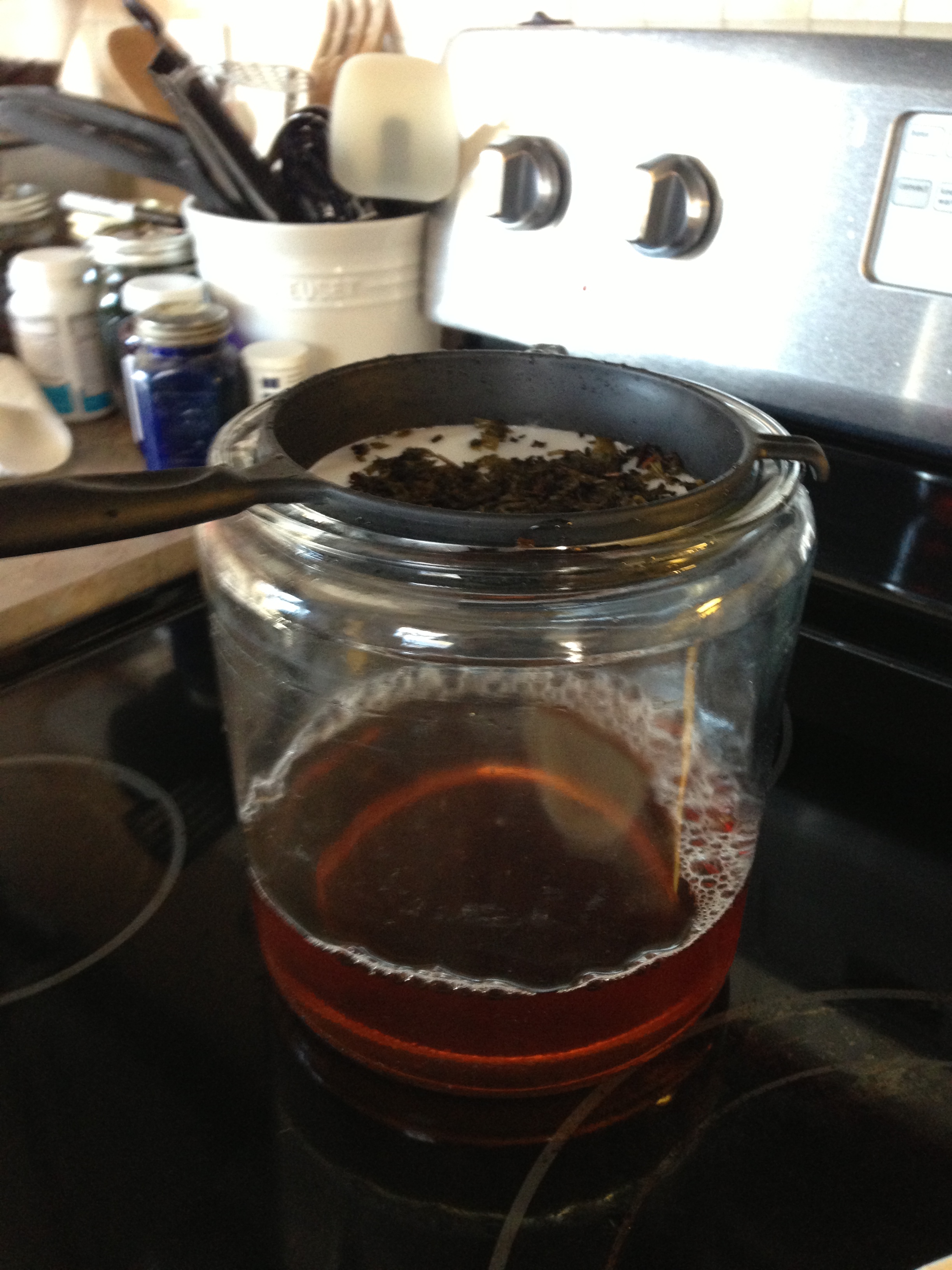
Here is my one quart of sweet tea. It is strained through a strainer to catch the tea leaves, or you can use tea bags, the choice is up to you. Next, I need to add 3 more quarts of filtered or purified water. I failed to mention that earlier. You don’t want to use just plain city water. The chlorine and other chemicals are not good for the scoby. I happen to have a water purifier attached to my sink, so we have a source of filtered water. If you don’t, you can boil your gallon of water for 10 minutes to purify it. Then let 3 quarts of it cool as you use one quart to brew your initial tea. If you have well water, I think that will work fine. I haven’t used it, but I know it would not be chlorinated.

making kombucha 5

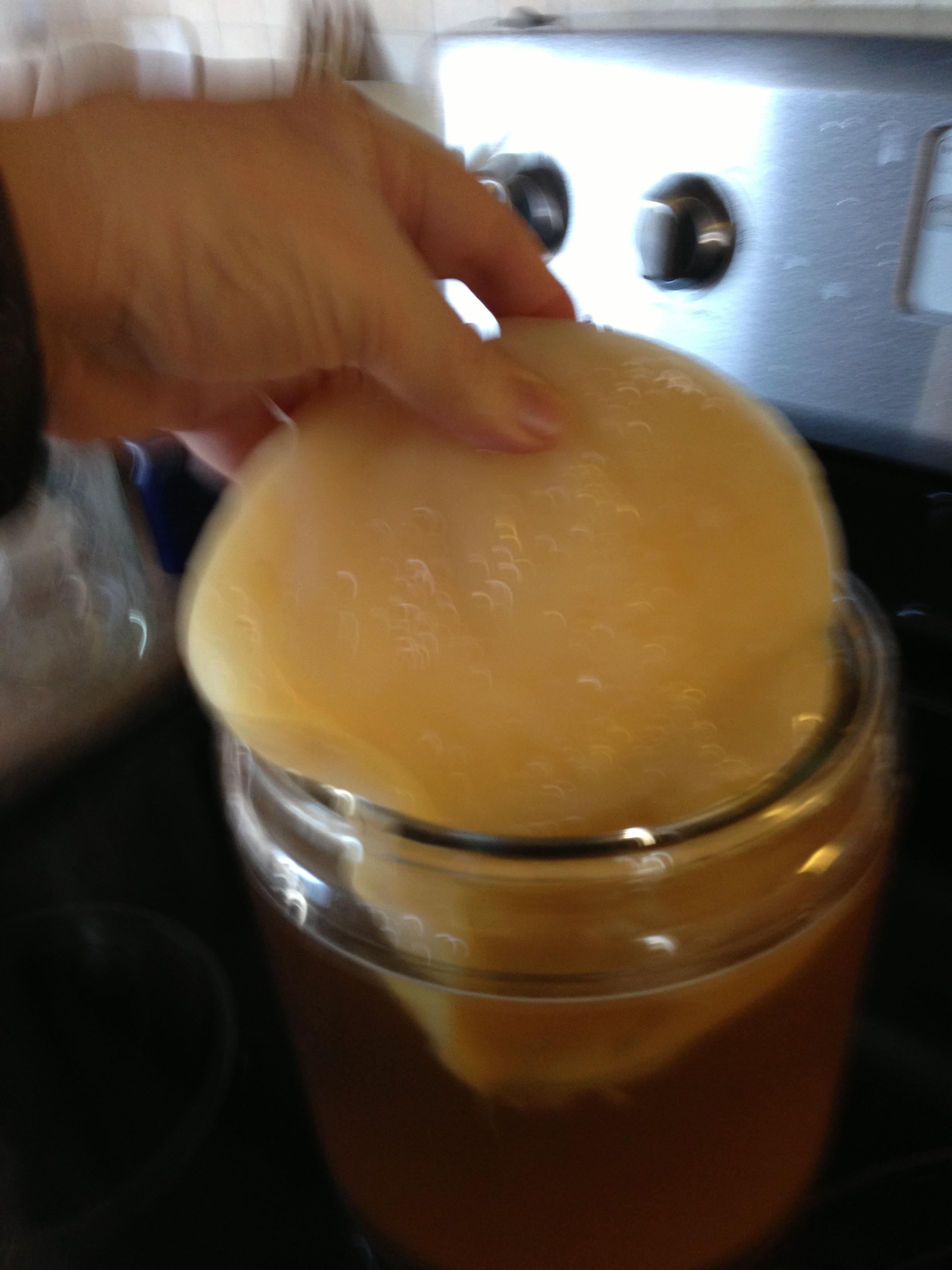
In this next picture I have added the remaining 3 quarts of water. Then you add 1-2 cups of starter liquid. You will have that when you receive your scoby, and after that you retain 1-2 cups from your freshly brewed kombucha for your starter liquid.
In this picture I am placing my scoby in my sweet tea mixture.

putting in scoby

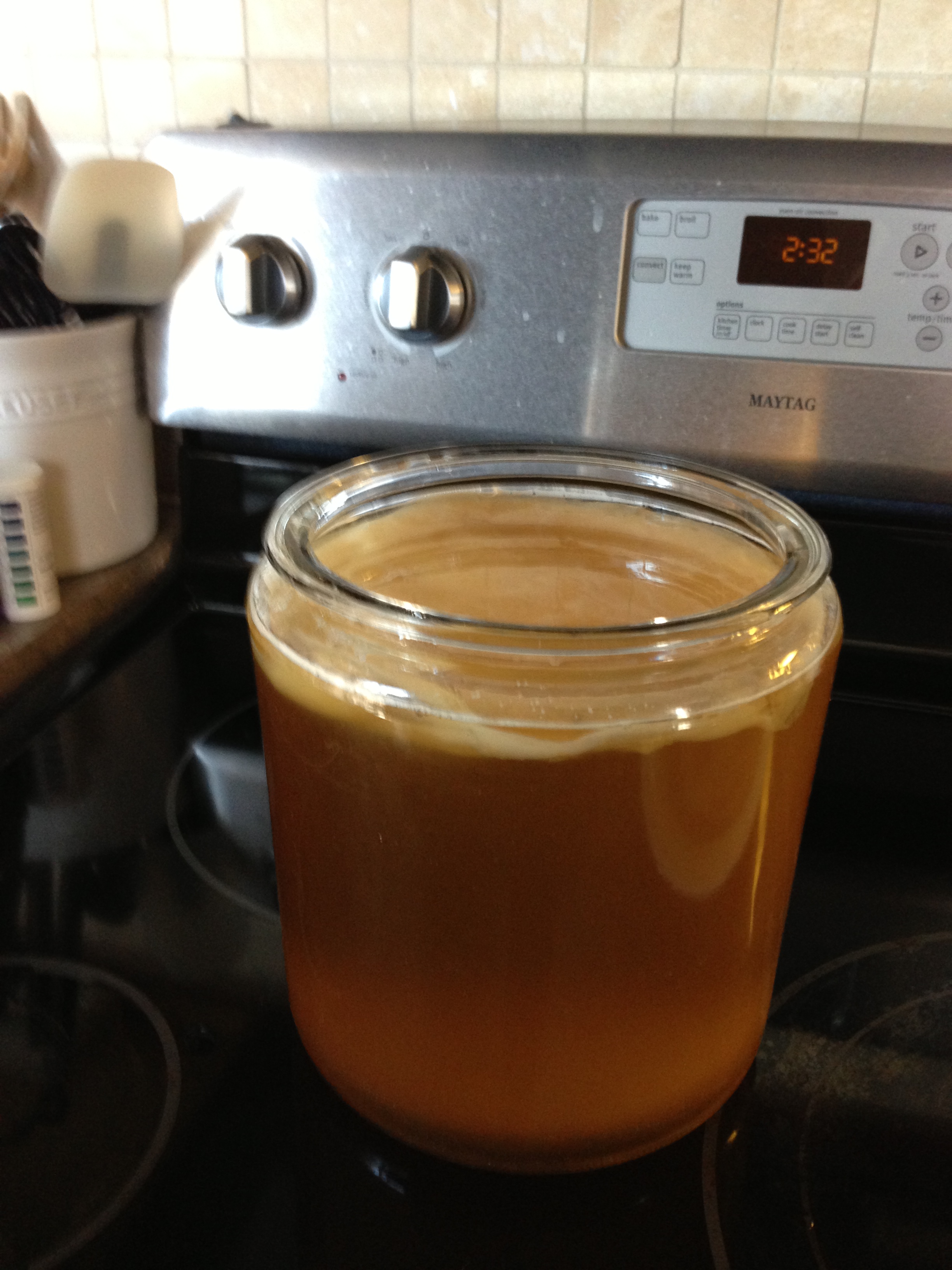
Now my tea is ready to ferment.

ready to ferment

As with other fermentation’s, you must cover your items with cloth and a rubber band. I choose quilting muslin. It is 100% cotton, unbleached and a tight enough weave to keep out gnats and such, but breathable enough for the gases to escape during fermentation. The brew needs to breathe.

covered and ready to go

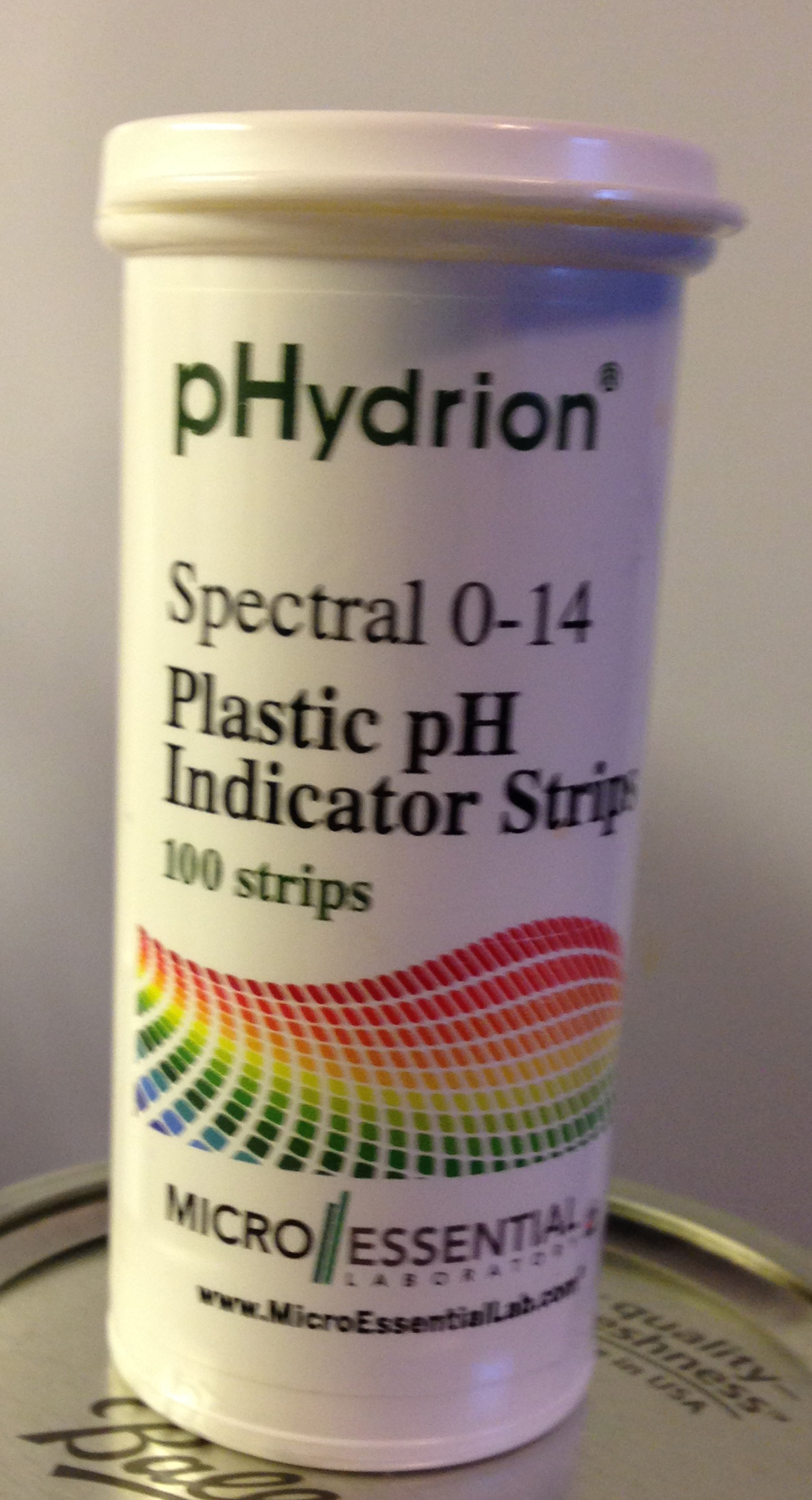
Now all you do is wait. You put your tea in a quiet, but warm place. That can be challenging in the winter months. Mine is in the den, but not very warm. Our den is cool and I need to find a better place. Fermentation’s do best between 72-85 degrees. During warmer weather, the fermentation time will be less. Perhaps just a week. During the winter months I let mine go at least 2 weeks if not a little longer. Then it’s ready to process again. Some blogs say to slip a straw down under the scoby and taste the finished product to see if it’s to your liking. I prefer to also test the PH level of the brew to make sure it’s suitable to drink. My instructions say that the PH should be between 3.5 – 2.5. This batch was 3.0, right in the middle. By the way, even with the PH being on the acidic side, this is considered to be a alkaline producing drink. Like lemons, even though they are acidic in nature, lemon in your water helps alkalize your body. Kombucha is considered to be an alkalizing drink. These are the PH strips I use. They were bought online as I couldn’t find any with a broad enough spectrum at the health food store.

blog pictures

After testing your brew, wash your hands and take out your scoby. You always want to be very careful to have everything as sanitary as possible. You don’t want to contaminate your scoby or introduce anything bad into your brew. I always put my scoby on a plate. Next take 2 cups of your fresh kombucha as a starter for your next batch. Set that aside.

scoby

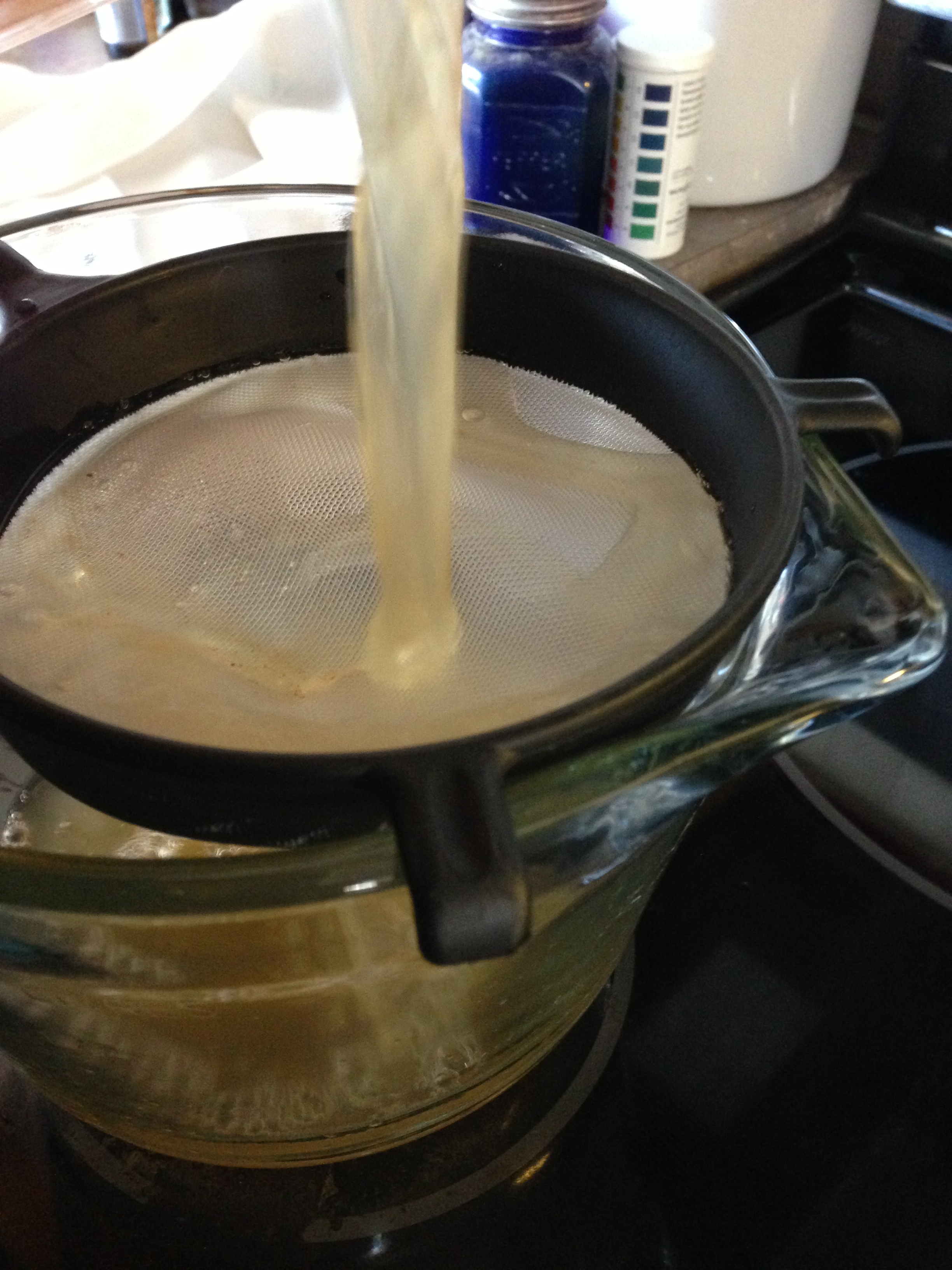
Next, take your strainer and pour your kombucha through it. You don’t HAVE to do this, but I prefer to strain out the yeast strands that you’ll see floating in the kombucha. You can eat them if you want, they are actually good for you, and I know someone who does eat them, but I’m not to that point yet. Maybe someday…..

filtering kombucha

Once you’ve strained your kombucha, place into clean jars or a pitcher with a lid and store in the refrigerator. I believe it’s beneficial to store it in glass and not plastic. I don’t want plastic leaching into it.

If you want to flavor your kombucha, or fizz it up, you can double ferment it. I will be posting a blog soon on how to double ferment both kombucha or water kefir. It’s the same process.

Here is a video of me pouring a glass of double fermented water kefir. You can see how fizzy it can become, and after not drinking soda for a couple of months, this is quite satisfying. I actually look forward to drinking my glass every day.

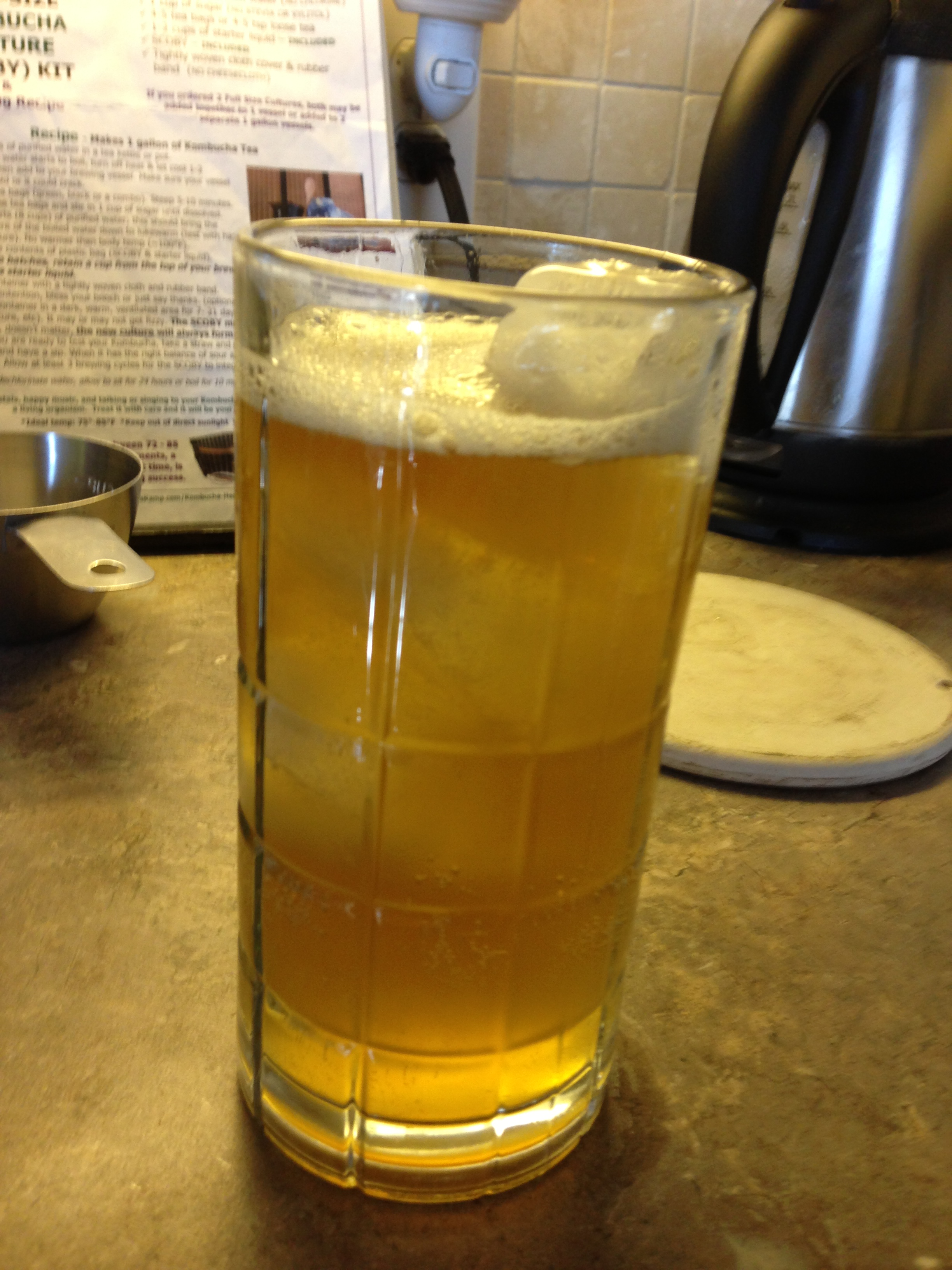
This is the glass I took upstairs and drank while I typed out this blog. It was 1/2 double fermented Blueberry water kefir and 1/2 unflavored kombucha. I love drinking it this way. You can also just pour a little juice into your glass with unflavored kombucha is you don’t care about the fizz or the extra sugar. After double fermenting, any sugar that was in the juice is used in the fermentation process so your end product is almost calorie free. 1 glass has about 8 calories. To me that’s quite amazing. 🙂

blog pictures 017

Here are several other links for you to read for more information.

http://www.acupuncture.com/herbs/kombucha1.htm

http://www.westonaprice.org/food-features/kvass-and-kombucha

Bon Appetite everyone. And again…..this is just one more way I’m making my food my medicine.

Making Home Made Kefir

An important dietary part of my life is drinking Kefir. You’ve never heard of Kefir? Well, let me tell you more about it.

Kefir is a liquid version of yogurt. At least that’s what I thought in the beginning. Unflavored, it tastes a lot like unflavored yogurt, except a bit more tangy. It was something I definitely had to develop a taste for, but in the beginning I flavored my own. I would add a tablespoon of maple syrup (which was my absolute favorite) or put it in my vita mixer and blend a banana and some chocolate syrup (a close second!!). It was even good blending it with blueberries or strawberries, but in the beginning when I was coming off of eating the typical western diet, full of sugar, I would blend my fruit and add a tablespoon or two of organic fruit jams that I bought at Whole Foods. I was flavoring a whole quart at a time, so the couple of extra tablespoons of sugar made it very palatable; similar to the brands you would buy in the store.

But as I did more research, I found out that there’s a whole lot more to Kefir than meets the eye. I found that it’s full of naturally occurring bacteria and yeast living in symbiosis as the result of the fermentation process. Kefir is loaded with vitamins, minerals and easily digested protein. It can even be consumed by the lactose intolerant because the yeast and bacteria provide the enzyme lactase, an enzyme which consumes most of the lactose left after the culturing process.

Kefir is fermented by kefir grains that contain the bacteria and yeast mixture clumped together with casein (milk protein) and complex sugars. The bacteria and yeast mixture can actually colonize the intestinal tract, a feat that yogurt cannot match, thus the difference between yogurt and kefir. Several of the strains of bacteria in the kefir culture are not found in yogurt. The yeast in kefir is able to deal effectively with pathogenic yeasts (like candida) in the body. The bacteria/yeast team cleanses and fortifies the intestinal tract making it more efficient at resisting pathogens.

So of course I was intrigued. I went online and bought some kefir grains so I could make my own (that’s just the way I am….I want to do things myself). Today, I’m going to show you just how easy it is to make your own kefir…..then you’ll have an endless supply to drink, getting the whey for fermenting your veggies, and saving yourself a whole bunch of money.

winter 2013 140

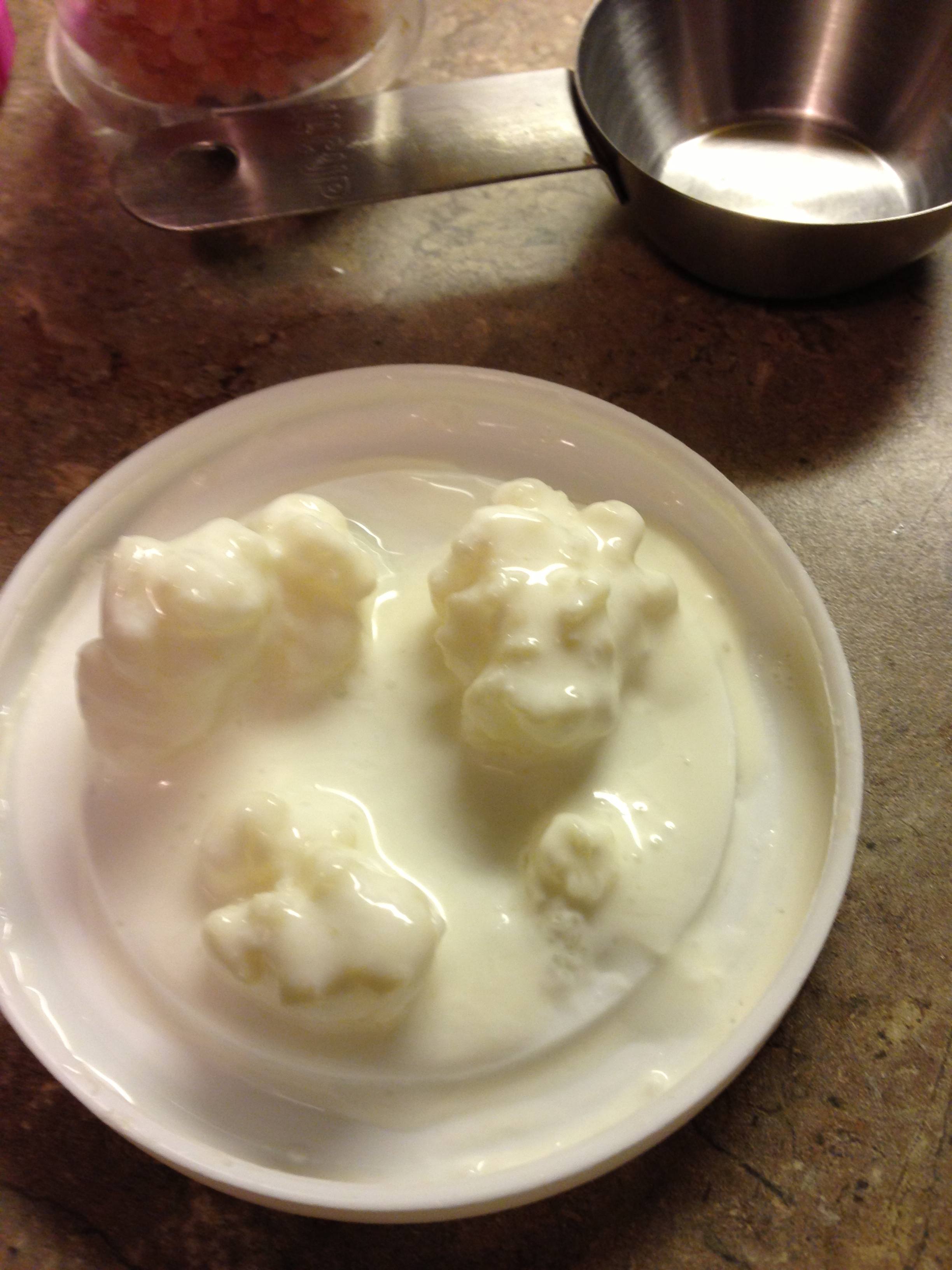
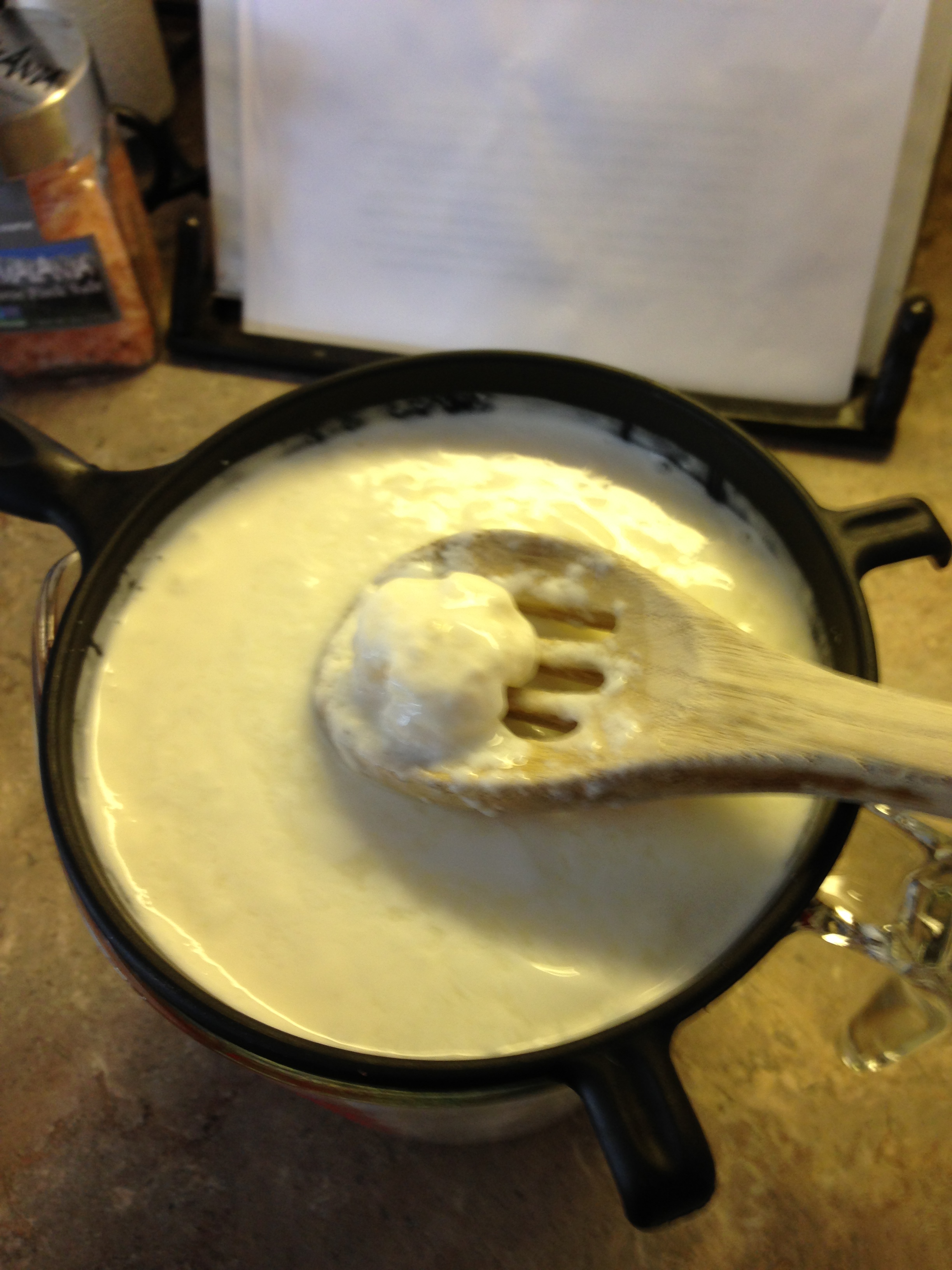
See those funny looking cauliflower looking things? Those are kefir grains. I put one or two of them into a quart jar of raw milk.

winter 2013 139

This picture shows my fresh milk in the jar with two grains floating on the top. They are getting ready to get to work 🙂
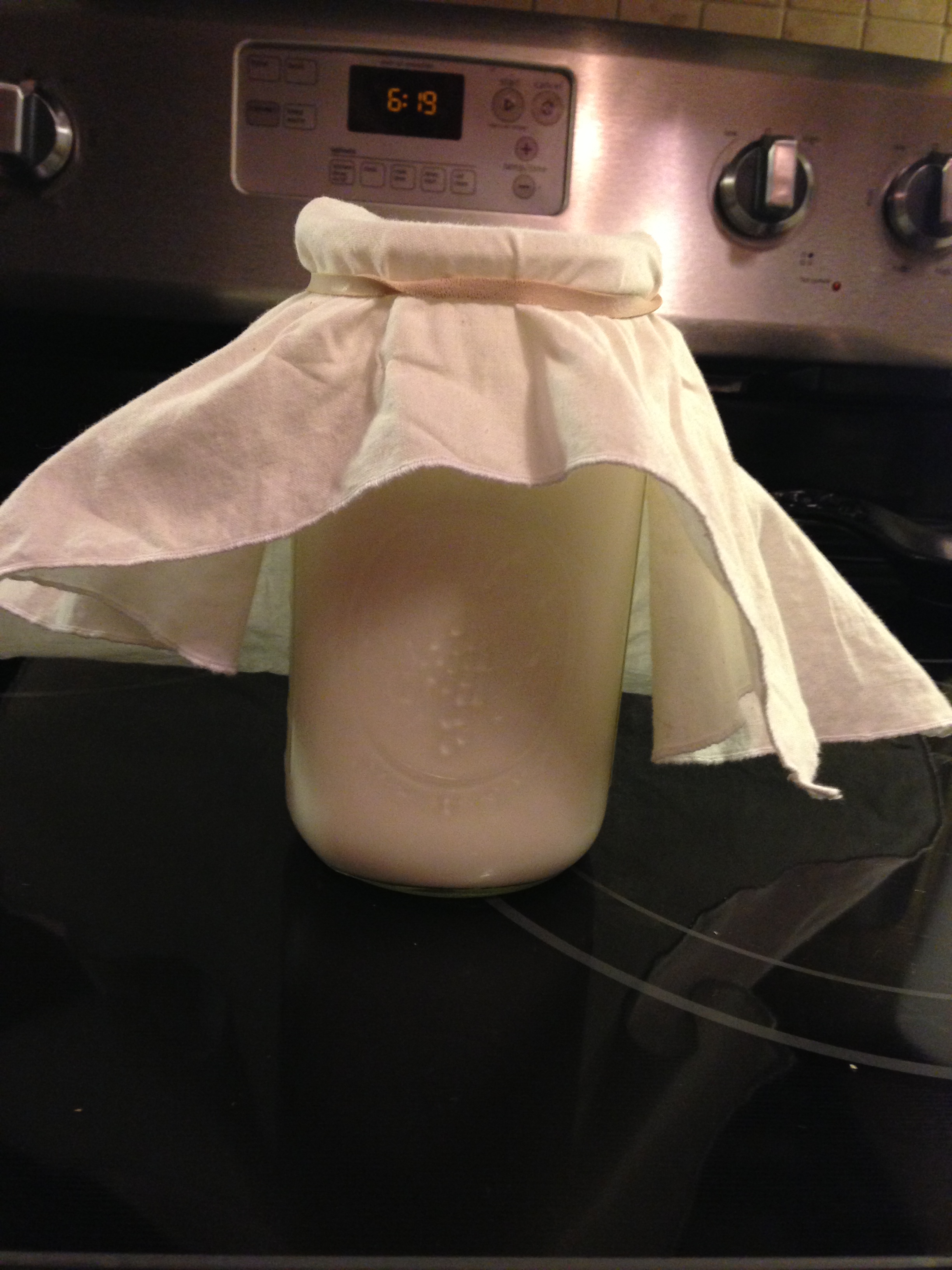
winter 2013 141

The only thing left to do is cover it with a cloth and rubber band around the top. I use muslin that I bought and hemmed from a fabric store. It’s not advisable to use cheese cloth because the weave is not tight enough and small gnats (who are drawn to anything fermenting) can actually get into your fermented brews and lay their eggs….ugh! So a word of advice, go buy a yard of muslin and cut some squares. Then you’ll have plenty more when your friends want to start making kefir of their own. After I cover my milk, I set it on top of the refrigerator. It usually takes 24 hours to complete, but this batch actually took a day and a half. I don’t know why it takes longer sometimes, but our house is chilly and I think temperature affects the fermentation time. Warmer temps will cut down the length of time it takes, but it’s always taken 24 hours.

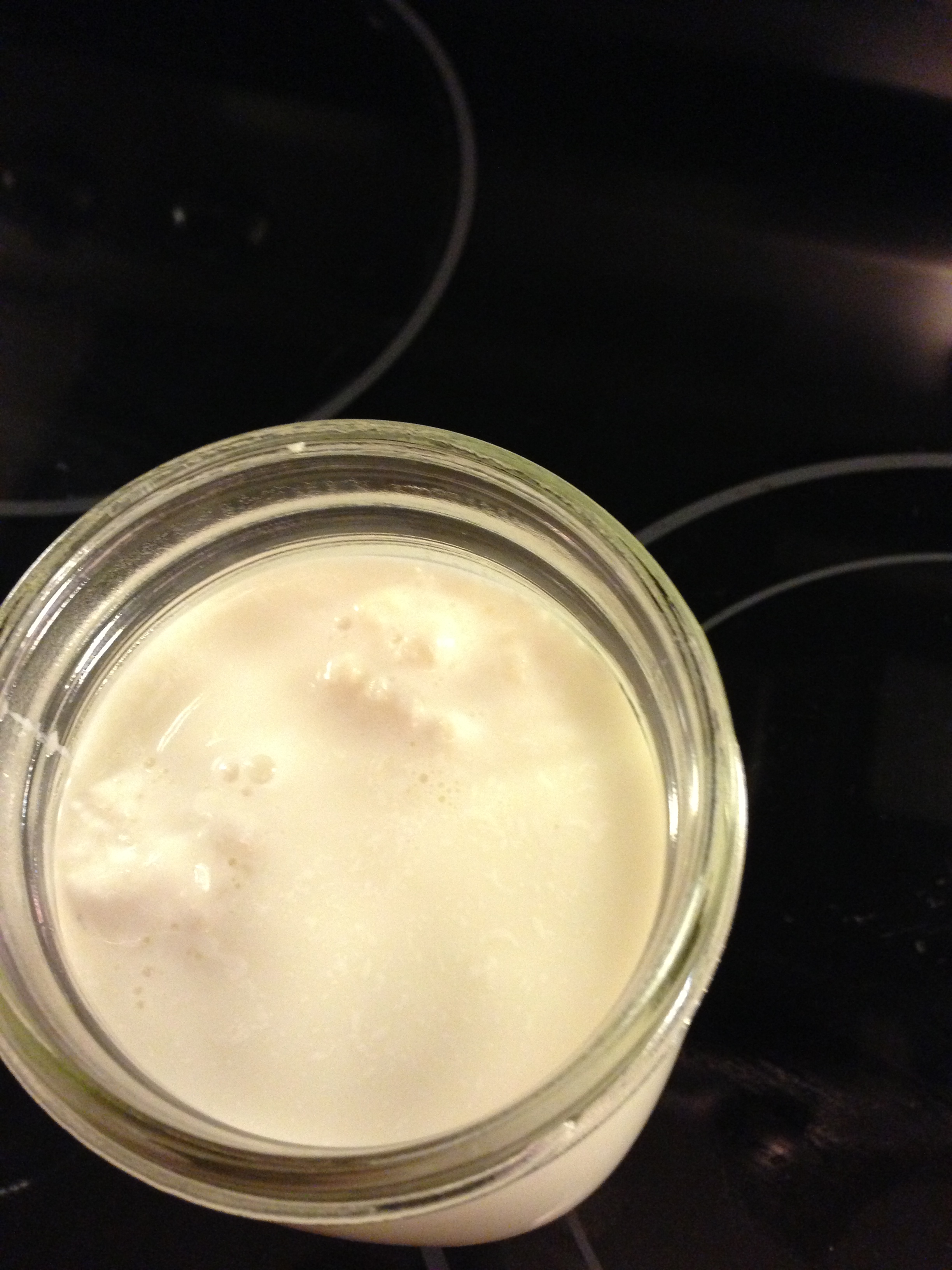
blog pictures 002

You can tell when the kefir is done by the thickness of the milk. See how the top of the milk has changed consistency from the picture up above. I jiggle the bottle to see if it’s firm all the way down. If it’s firm on top but you can tell it’s still very liquid-like down below, then leave it to complete. That’s what this batch was like, so I left it for another half a day. I’ve forgotten to go get it for 2-3 days before and it was still fine, just stronger in flavor, but it hadn’t gone bad.

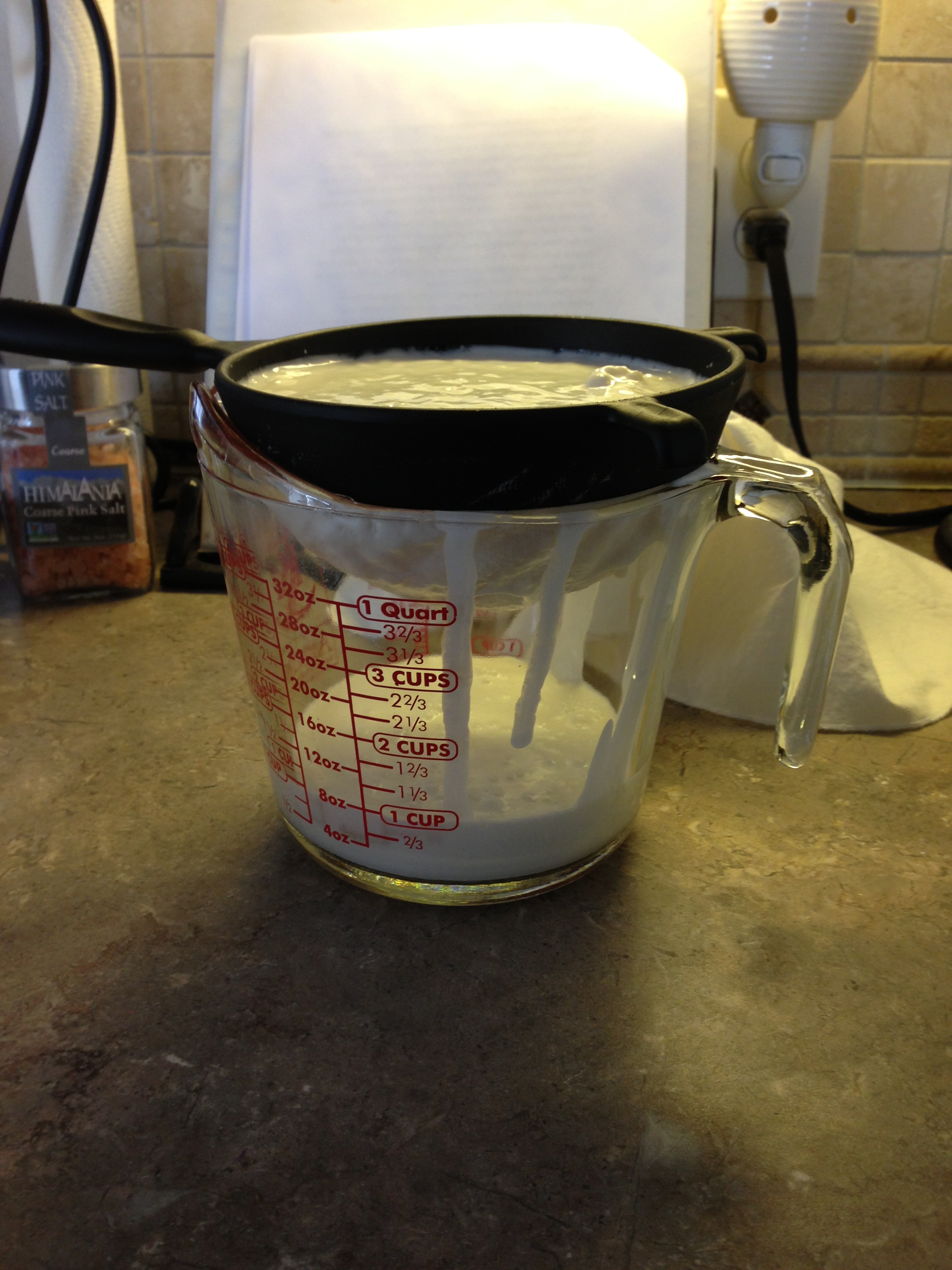
blog pictures 004

The next step is to run your kefir through a strainer. I suppose you wouldn’t have to do this step but I like it better this way. First of all, it helps you find your kefir grains. I bought a nylon strainer (I had to find it online, Walmart or Target only had metal ones) because it was advised from all the sites I read not to use metal. They said it could affect the grains. I didn’t want to take a chance so I bought the nylon type. I can’t prove one way or the other whether it’s completely necessary, but I didn’t want to kill my kefir grains so I didn’t want to take the chance. I use a wooden spoon to scoop out the grains then I stir all of the kefir through the strainer. It becomes liquefied again but thicker than milk. When I haven’t done that I come across chunks as I’m drinking it and I don’t like that, so it’s just my own personal preference.

blog pictures 005

Here, I’m taking the grains back out of the kefir.

blog pictures 007

This is where my grains live when they’re not making kefir. I put them into a small bowl of fresh milk, cover it with a snap on lid and put it into the refrigerator. You need to give them fresh milk every 3-4 days if you’re not ready to make another batch of kefir. I’ve given some to friends and they failed to do that and they died. So it’s something that needs to be fed to survive.

That’s all there is to it. I just put the kefir into a clean jar, put on the lid and put it into the refrigerator. Then it’s ready to drink whenever you want it. I’ve never had any stored for longer than a week and a half, but it never went bad. Evidently, back in the pioneer days they used this type of fermentation to keep milk from spoiling so I don’t think there’s any problem with storing it for a bit. It will separate with the whey floating on top, but you just shake it back together before pouring a glass.

One last thought before closing. Since I’m actively looking for ways to get lots of good probiotics into my system, kefir has been a good choice when looking for probiotics because of the volume of beneficial bacteria. According to one site,the results were: “one pill of Probiotic supplement has approximately 15 billion beneficial bacteria whereas 500 ml of yogurt contains approximately 1.5 trillion friendly bacteria. Now what will make you amazed is that 500 ml of kefir contains 5 trillion probiotics.”

So kefir, along with kombucha and double fermented water kefir is part of my daily intake. I will show you how to make kombucha real soon, once a batch is ready to go and another batch made.

I will let you know in time, as my body heals, how it’s all going. For now, this is just another way of letting “my food be my medicine”.

ps: A glass of unflavored kefir was drunk while typing this blog 😉

So What Is That Strange Food You’re Eating Anyway-Making Fermented Veggies

I know many of you have asked for more information about the GAPS diet that I’ve been on now for about a month.  In the post that I wrote about the other day I mentioned the “whys” of what led me this direction. Today I’m going to talk about one of the “strange” foods that I’ve been eating 3 times a day, everyday for a month.  That food is sauerkraut or fermented vegetables.

I have to admit, I had to develop a taste for them.  I made my first batch 6 or 7 months ago, and didn’t get it all eaten up until I started GAPS the first of January.  They just hung around in my fridge….getting more and more pungent with every passing week. 

My interest in eating fermented foods was peaked when I started reading tons of articles on the benefits of fermented foods.  I had been taking bottles of probiotic’s over the past few years because I knew the good benefits of them for my system.  It’s a known fact that the foundation of your immune system is your gut and the health of your immune system is directly correlated by the health of your gut.  Bad gut health….bad immune system.  With all the auto-immune disorders out there today, Arthritis, Crohn’s, Chronic Fatigue Syndrome, Multiple Sclerosis, Fibromyalgia….the list goes on and on….. and the poor quality of the standard american diet (SAD for short) we have diseases running rampant.  I was spending $100’s of dollars on supplements which included probiotic capsules.

So I started making and consuming Kombucha, Kefir, Water Kefir and Fermented Vegetables to:

1.  Save on cost because making your own was definitely cheaper

2.  Live, viable food is always healthier and easier for the body to absorb than a pill

3.  With eating live fermented foods you are getting more bacteria and yeast strains than buying a bottle of capsules

So this post is about making Fermented Vegetables (or sauerkraut).


winter 2013 119

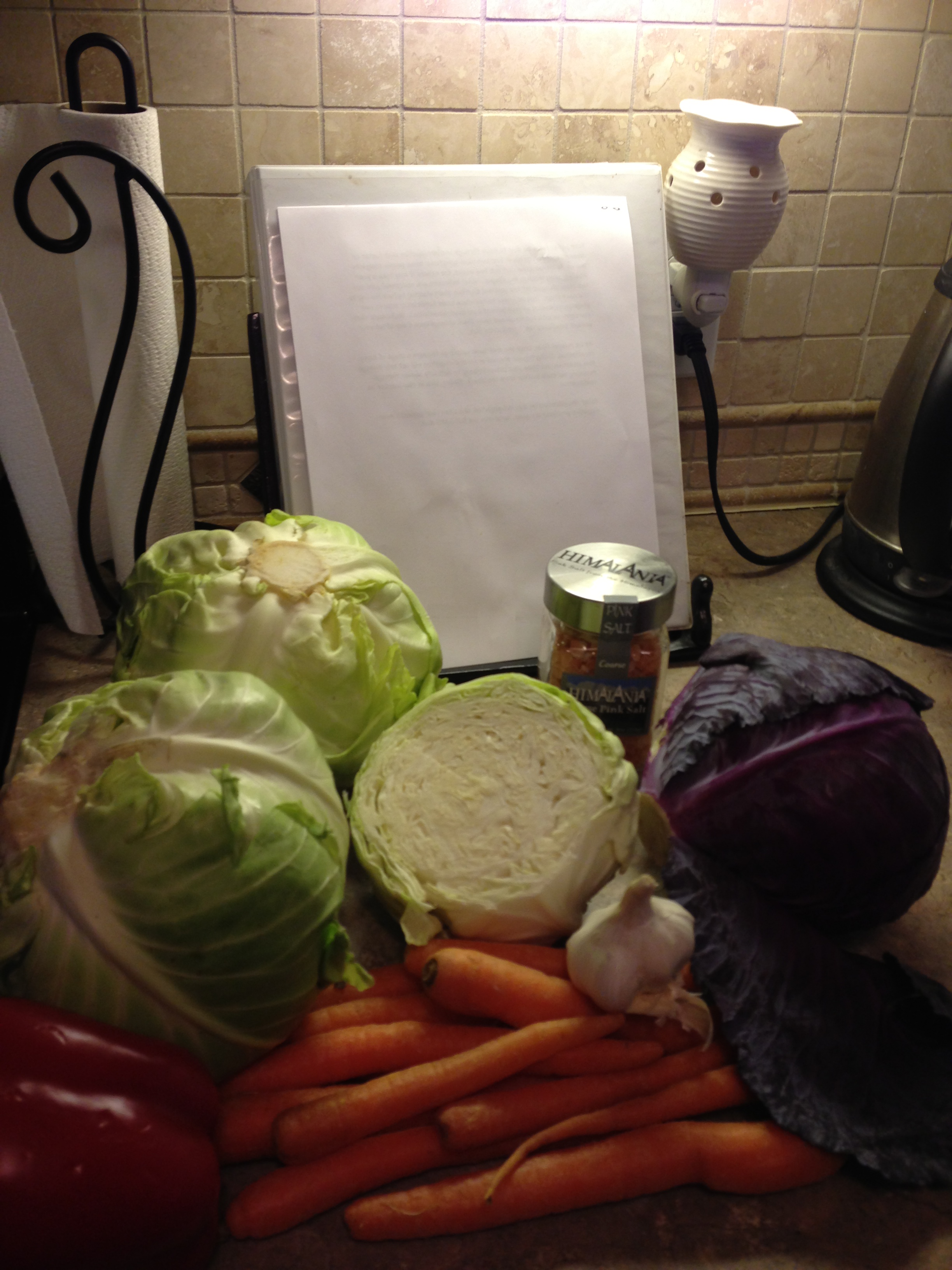
These are the vegetables that I’m going to use to make my sauerkraut.  I will take these vegetables and use a food processor to shred as many of them as possible, cutting my preparation time down greatly.  I used:

2 heads of green cabbage

1 head of red cabbage

10 carrots

1 onion

6 cloves of garlic

1 red pepper

2-3 Tablespoons of Himalayan Sea Salt

1/2 Cup of Kefir Whey

winter 2013 117

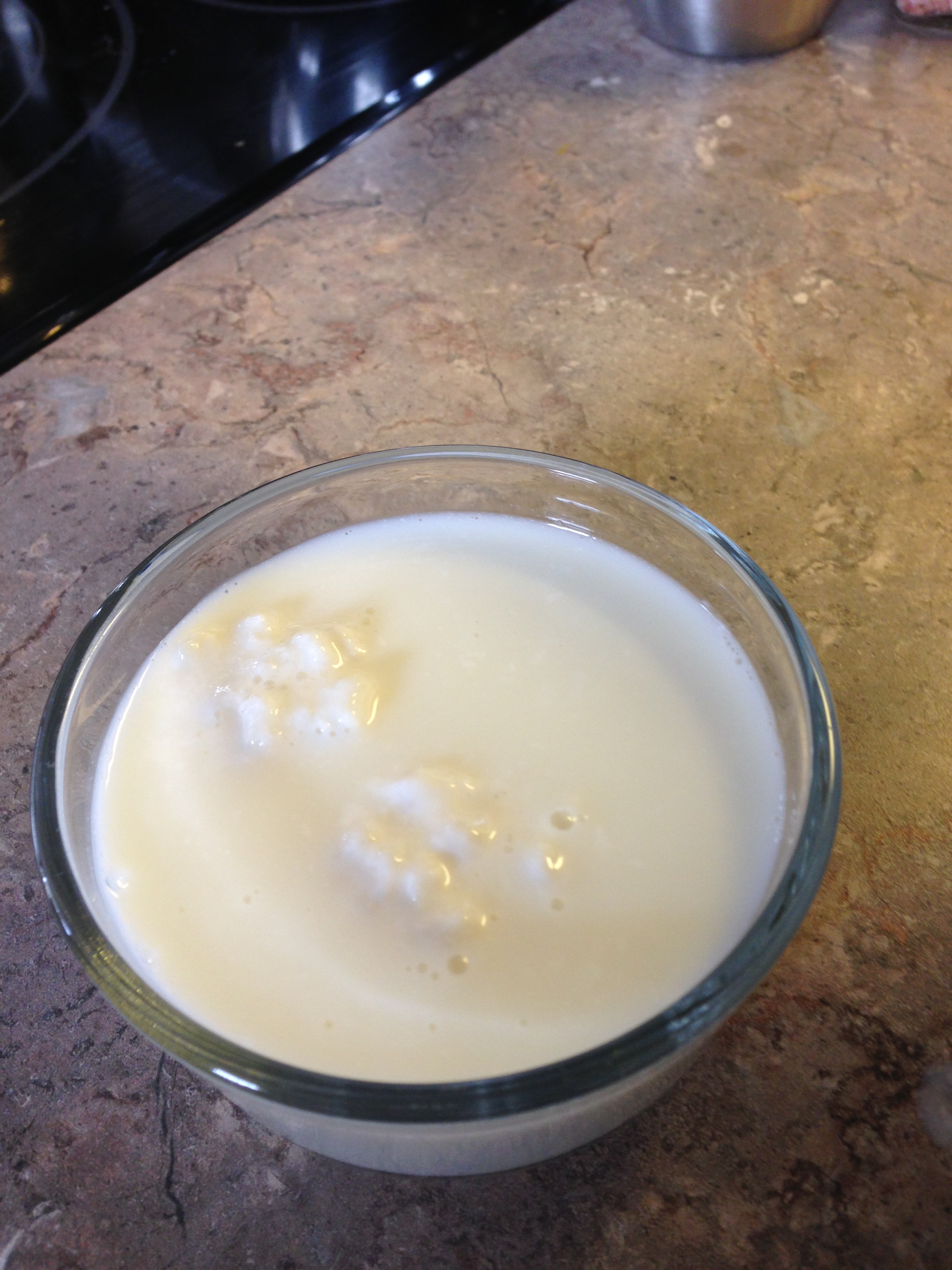
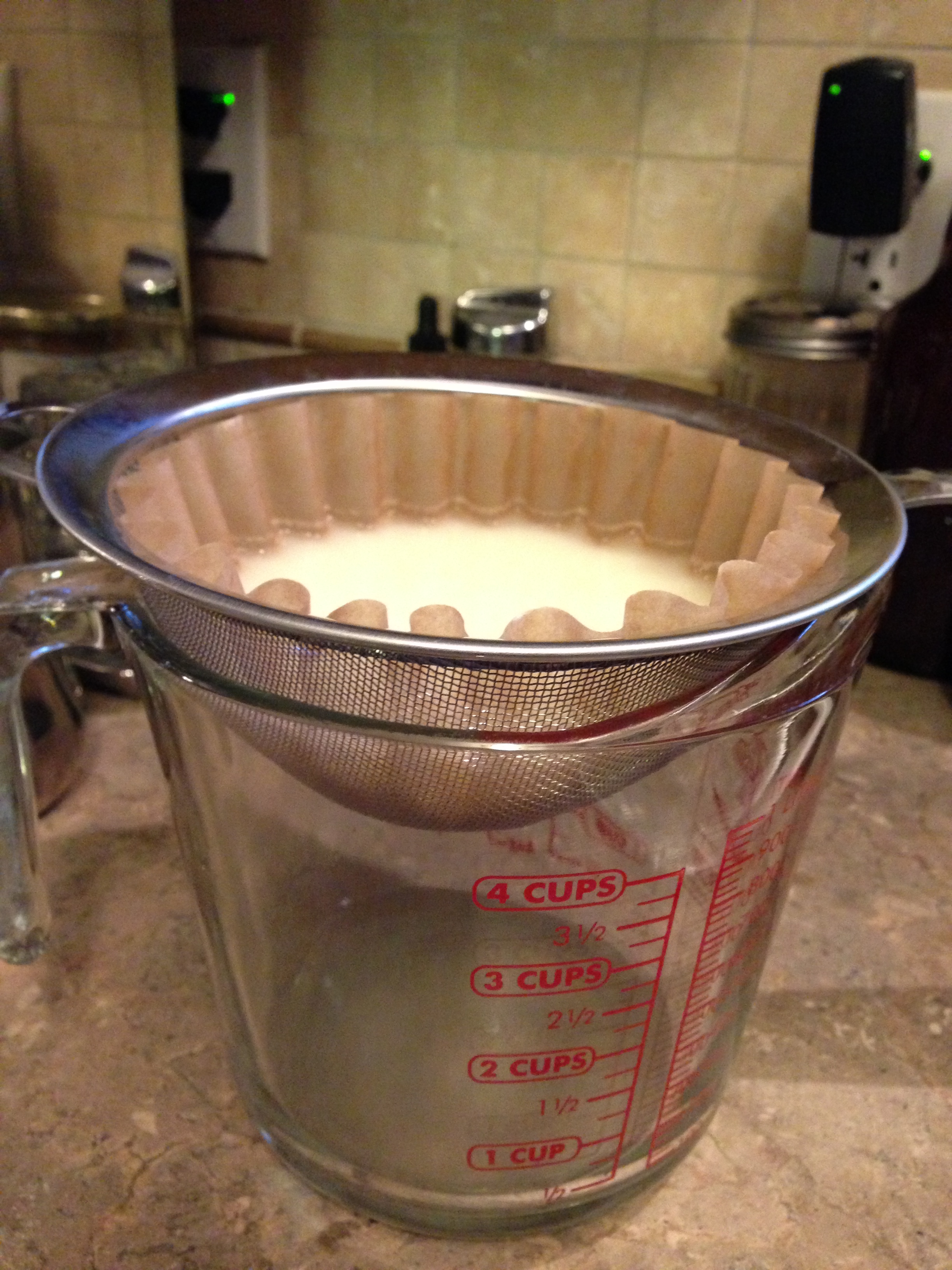
This is the culture I’m going to use to inoculate my vegetables.  See the clear liquid in the bottom of the measuring cup?  That is whey.  To get the whey, you can use either plain yogurt or kefir.  I’ve used kefir that I make myself (a post is coming about making kefir soon).  Place a strainer over a measuring cup and place a coffee filter inside.  Pour the kefir into the coffee filter and let set for a few hours.  The dairy substance will stay in the strainer making something similar to cream cheese.  The clear liquid that drips through is the whey.  That will be added to the vegetable mixture in time.

winter 2013 118

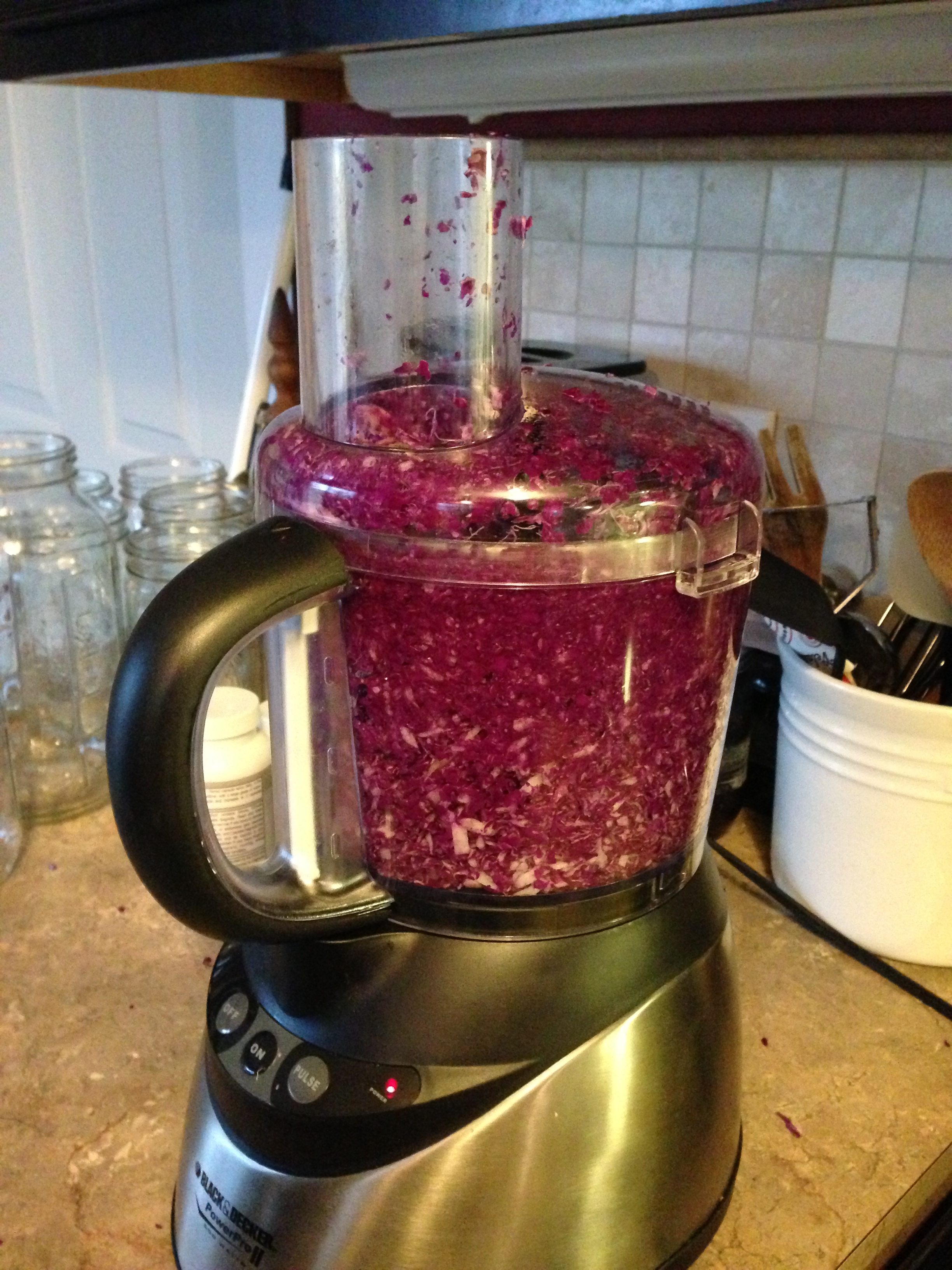
Here is the food processor full of red cabbage.  One of the ingredients in the sauerkraut.

winter 2013 123

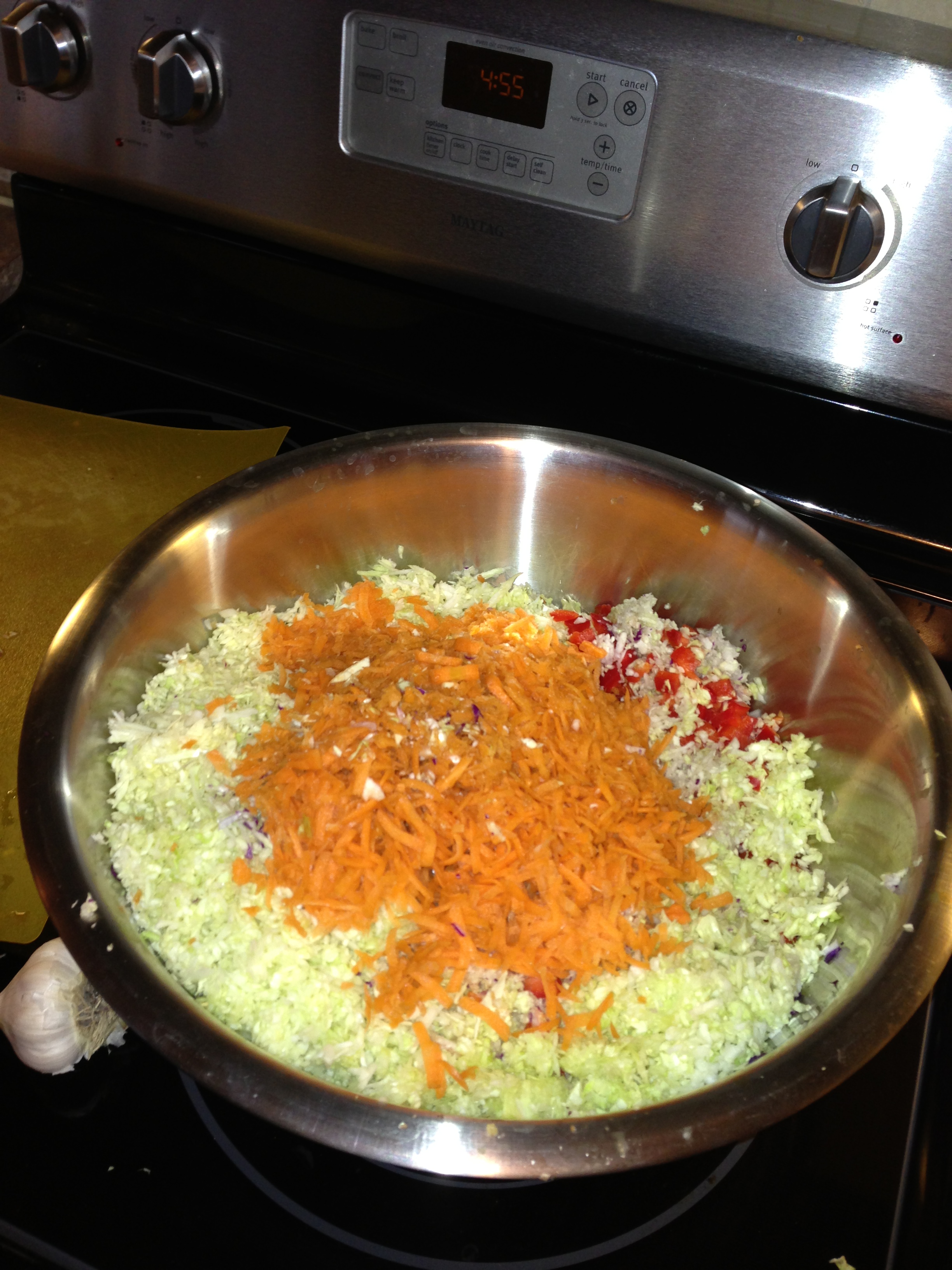
Here is my bowl full of shredded and chopped ingredients.  Next you add sea salt.  I used Himalayan Sea salt.  It’s full of minerals and has a really nice flavor. 

The next step is to start kneading your cabbage mixture.  You knead the salt and cabbage together to start breaking down the cell walls of your vegetables.  Then I add the whey.  For this large bowl I added 1/2 cup of whey.  Then I kept kneading.

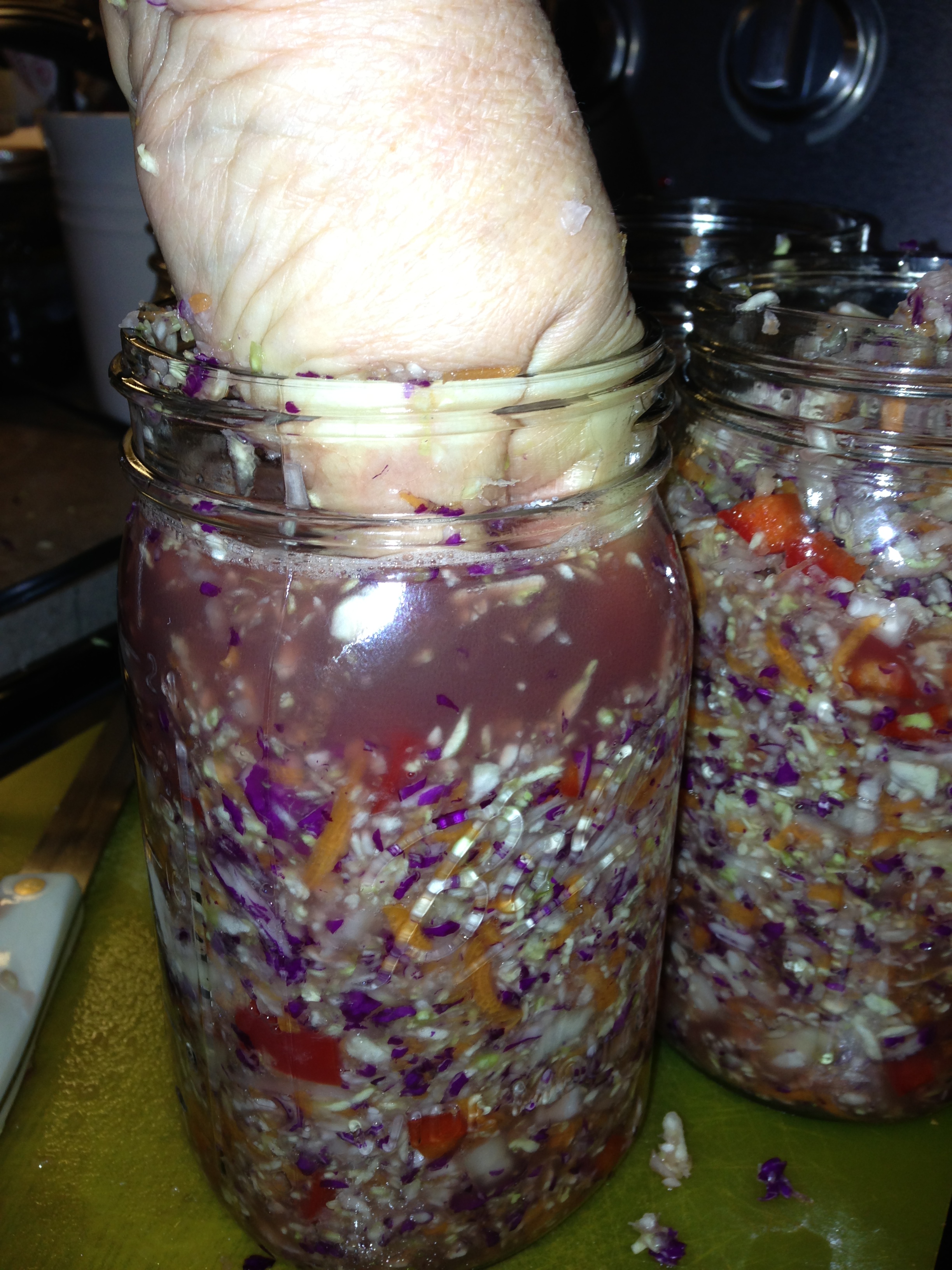
When you pick up handfuls of the cabbage mixture, you can literally see liquid dripping from your hands.  Next you place your mixture into large mouth jars (or some use a crock).  You take your hand and press the mixture down into the jar to remove any air.  The picture below shows just how much liquid will be in your mixture.  This is called the brine.

winter 2013 129

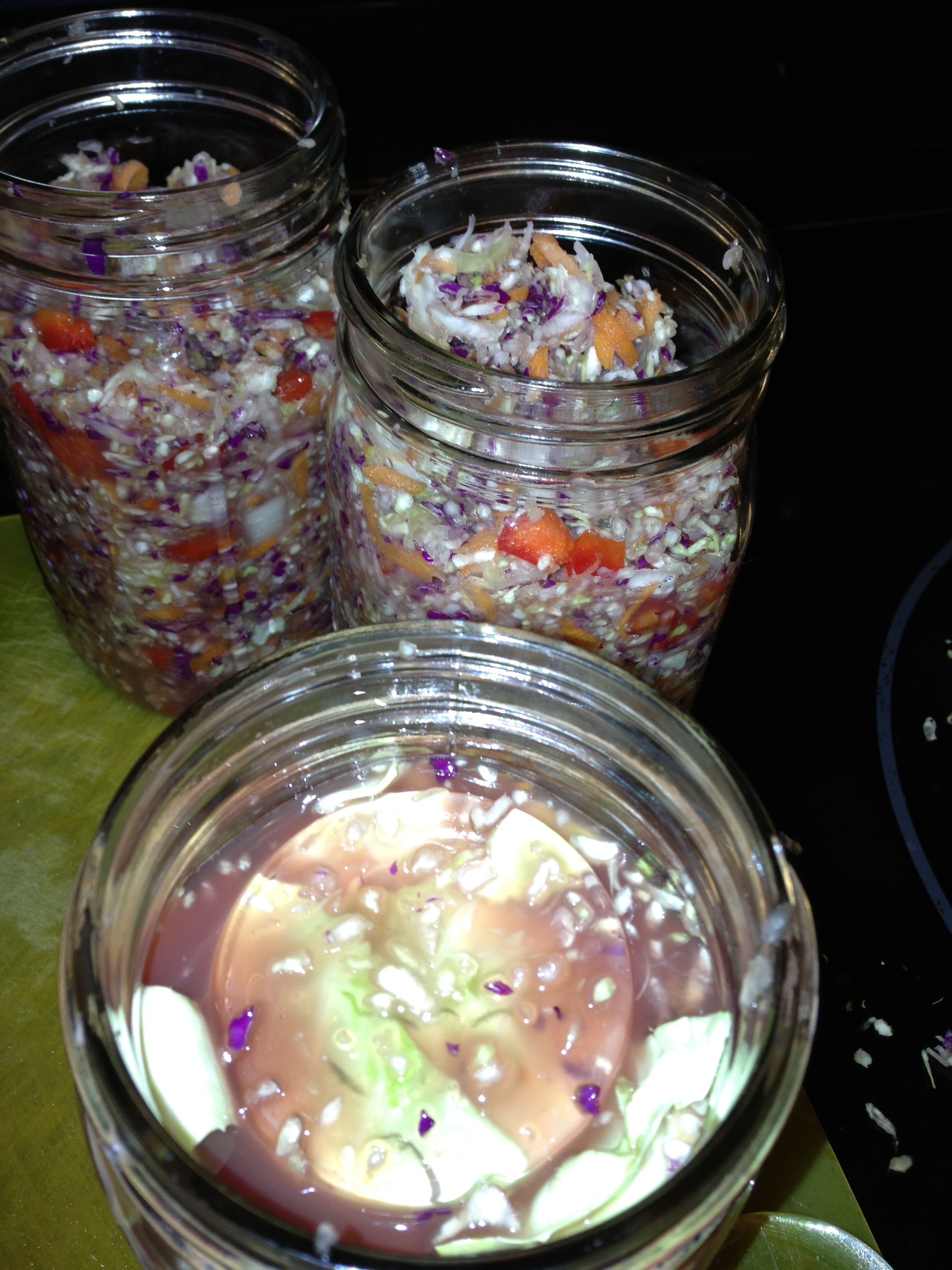
When all your jars are filled (I leave about 2 inches at the top of the jars.  This allows room for the fermenting process to take place without the jars spewing all over.  You top each jar with a cabbage leaf to keep the mixture down underneath the brine.  The process of fermentation takes place in an anaerobic environment, that means air free.  If the cabbage was exposed to air then rotting would take place, not fermentation.  The cabbage leaf keeps all the cabbage mixture down under the brine so it’s not exposed to air.

winter 2013 131

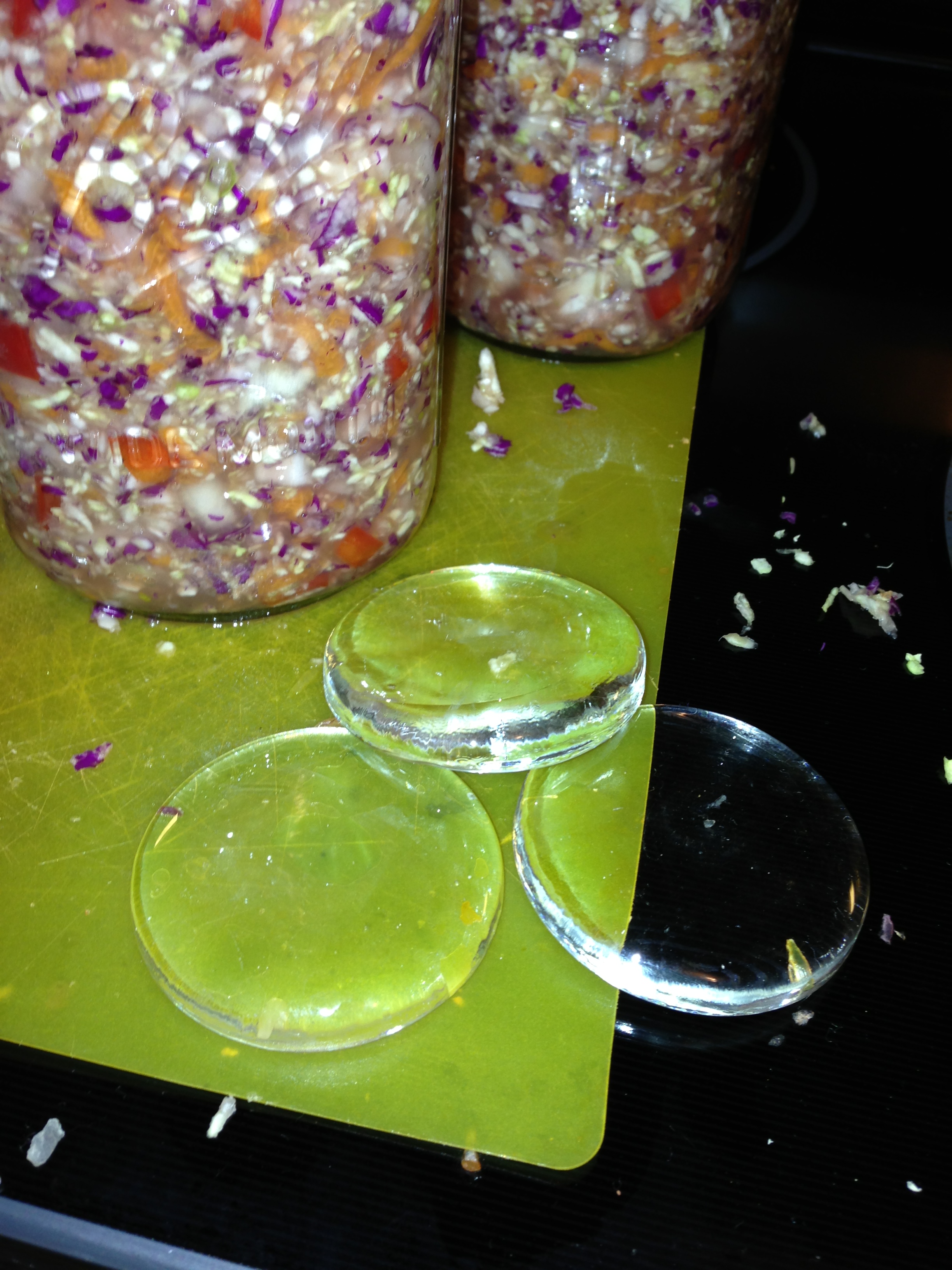
See the clear glass disks in the picture above?  Those are called lacto-fermentation weights.  You don’t have to have these, but I find them helpful to place on top of the cabbage leaf to help give it weight.  You can buy these on Ebay, although when I went to buy them last year they were back ordered for 3 months before I got them.  I think making your own fermented foods is making a come back here in the US.

winter 2013 132

If you look in the top of the jar you will see the edges of the cabbage leaf peeking out and the round glass weight on top.

winter 2013 134

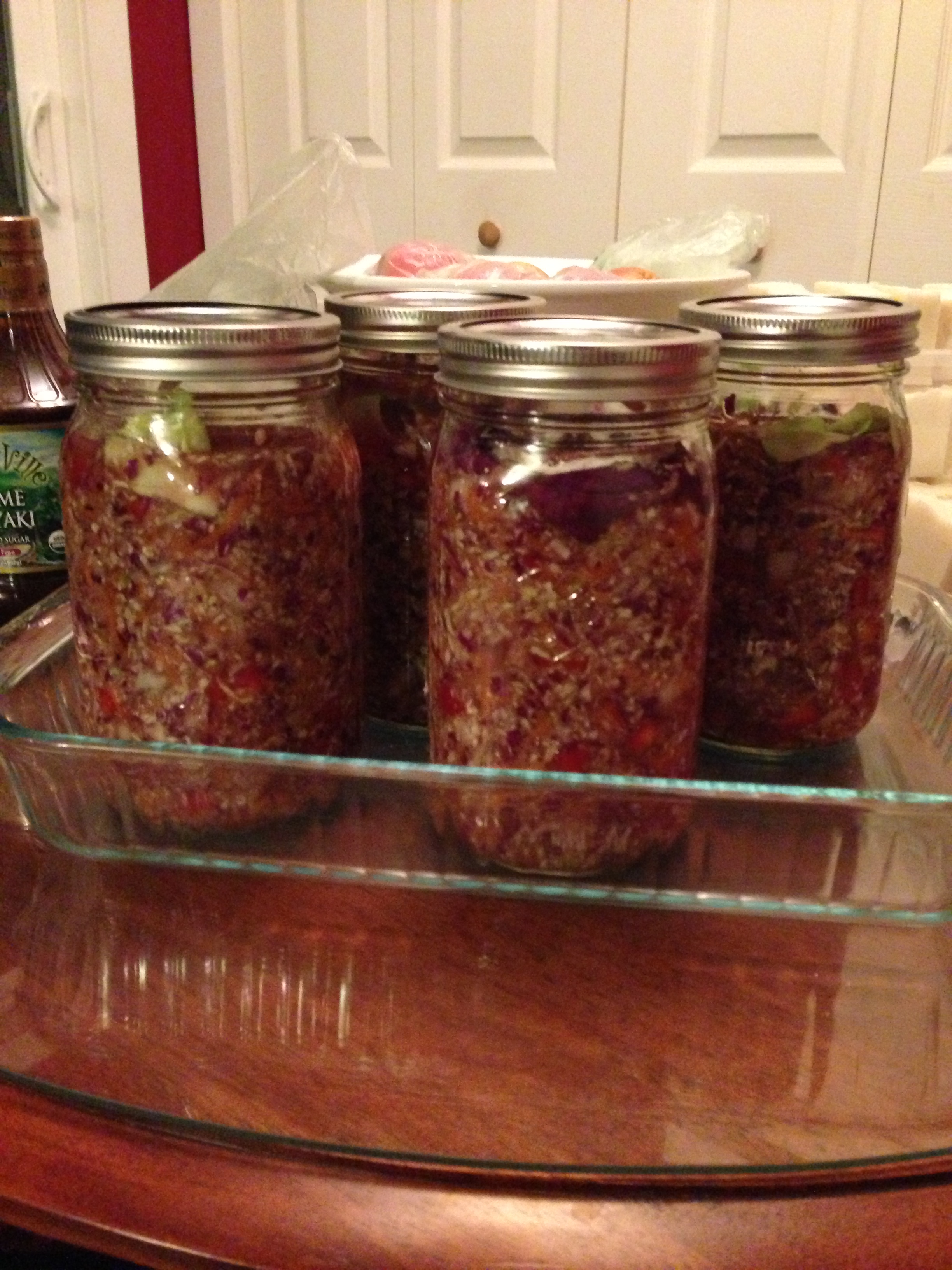
I’ve never had a batch of veggies not spew over yet after a couple of days, so I set all my jars in a cake pan to catch the brine.  I am trying a new thing this time.  I’ve screwed the lids on the jars very loosely, so hopefully between the 2 inch space I’ve left and the loose jar lids, the pressure will not build up so much and cut down on the spewing.  I want to keep all my brine, thank you very much.  It’s full of probiotic goodness.

winter 2013 142

The process of fermenting with a whey culture takes about 5-7 days.  The directions say to keep them in a dark environment, so I’ve covered them with a towel.  I will check on them everyday, making sure that everything is staying down under the brine.  I will probably take off the lids and push on the weight to make sure everything is submerged.

This time next week I will be eating a jar of these veggies.  I have them with my eggs at breakfast and at all my other meals too.

This is just one way my food has become my medicine.  Instead of buying bottles of probiotics, I’m making my probiotics.  Here is a post from Dr. Mercola’s website:

“It’s worth noting that each mouthful of fermented food can provide trillions of beneficial bacteria—far more than you can get from a probiotics supplement, which will typically provide you with colony-forming units in the billions. I thought this would be a good analysis, so I tested fermented vegetables produced with our probiotic starter culture to determine their probiotic potency and was astounded to discover they had 10 trillion colony-forming units of bacteria. Literally, one serving of vegetables was equal to an entire bottle of a high potency probiotic!”

Now I realize he tested his batch that had been made with a culture starter, but I can’t help but believe that inoculating my vegetables with my own kefir whey is comparable.  Whey is a culture starter too. Can you believe it??  One serving was equal to an entire bottle of probiotics?  I find that amazing, and making your own “live” food is SO much cheaper.

There are actually two different methods to making fermented vegetables. The way I just showed you is called lacto fermentation and then there’s wild fermentation. In wild fermentation, you leave out the whey starter, add extra salt to keep the bad bacteria from growing during the fermentation time and just allow the good bacteria that is already present on the surface of the vegetables to grow. I have made it both ways. The processing time is longer for the wild fermenting. It takes about a month to complete. I didn’t have that long this time as I was almost out of veggies so I made the lacto fermented variety to get my next batch made quicker.

So there you have it……step by step instructions on one of the “strange” things I’ve been eating, but when you think about it, it’s not really so strange after all.  It’s just that we here in the west have just forgotten the ways of our forefathers.  They were eating like this for centuries, and many other countries around the world still are.


My journey into GAPS

Many circumstances played in my decision to go on the GAPS diet.  I have arthritis, and have it in every limb (and it seems) every joint in my body.  I’ve already had 2 surgeries to remove bone spurs in various parts of my body.  It just seems to me that if I can’t find the cause of why my body displaces calcium (which is what bone spurs are), then I’m bound for plenty more surgeries in my life.  A thought I don’t really relish…..Especially joint surgeries.  Every time I’ve had a joint surgery I’ve had 2-3 months of physical therapy afterwards to make sure you regain full motion of the joint.

Several years ago I started researching the words “anti-inflammatory diet”.  Those words ran through my head for quite a while before I Googled them and found out that there was indeed such thing as an anti-inflammatory diet.  I bought a book and started being more selective in what I ate.  It seemed like it helped for a while, but then I either got side-tract or something because before I knew it I wasn’t paying much attention anymore.  I was just eating whatever I wanted and counting calories more than paying attention to the quality of food.  I was on a mission to lose weight and I DID lose about 40 pounds, which I kept off, but I needed to lose a whole lot more.

Another couple of years went by and I wasn’t feeling any better….in fact a lot of times I was feeling worse.  I was waking up in the middle of the night with my hips aching, my back hurting……when I went up and down stairs my knees hurt etc.  Continuous pain is wearing….it makes you tired, and distracted and sometimes grumpy.  I tend to isolate and shut down when I’m feeling crummy because I don’t want to be grumpy.  I don’t like to hear constant complaining from others, so I refuse to do it myself.  And I refuse to start taking medications to get rid of pain.  I’ve read too much about the side effects and I don’t want to add more complications to my body just because of pain.  So, for the most part I just try to ignore it.

So, more research, more reading, more experimenting.  I started reading about how your PH level could affect what your body does with calcium.  If your body is too acidic, which most people in the west are because of our high grain and fast food diets and such, then your body leaches calcium from your bones to buffer your acidic system.  Basically, your body will do whatever it needs to do to sustain itself.  Being too acidic will kill you.  Since your body goes into survival mode to stay alive, it will do damage to itself for survival.  Thus….leaching calcium to buffer your PH…robbing Peter to pay Paul…  I started being interested in Kombucha, Kefir and fermented vegetables.  I looked up how to double ferment Kombucha and Kefir water to make yummy tasting pro-biotic drinks….they also lower your Acidotic system and bring it back into balance.

I did that for about 6 months, in the mean time going to a  natural path in St. Clair for some deeper evaluation.  She verified that I was indeed acidic, (I’m sure I was much worse before the Kombucha) but there were more issues, my liver was toxic, meaning I wasn’t detoxing well.  My cellular debris level was almost off the charts which meant I had cells dying off faster than they were renewing….ugh…..  That was rather discouraging.  I had basically considered myself healthier than most, but certainly not in the top categories.  I knew being overweight was keeping my unhealthy. I mean, I was eating greens like they were going out of style, my dietary intake, in my opinion was pretty darn good.  I wasn’t eating fast food any more.  I was buying organic and grass-fed beef, and raw, unpasteurized milk.  I was making an effort to regain health.  I don’t want to be a senior one of these days that is unhealthy and barely getting around. 

So she put me on some supplements, which I religiously took for the month, then on my next visit she suggested we do some food allergy testing.  I was SHOCKED at what the results were.  I was showing an allergic (or inflammatory) response to the grass-fed beef that I’d bought (I had almost half a cows worth in my freezer).  That was discouraging….then I showed an inflammatory response to the raw milk that I was making an effort to drink.  But the craziest part was an inflammatory response to all the greens.  The Chard, the Kale, the lettuces……she had never seen anyone showing a response to greens.  Basically, when it came down to it, my system was so messed up that I was having a response to basically everything I ate.  It didn’t matter that it was organic, or raw or locally and sustainably grown…..  Believe me, I was frustrated!

Her suggestion was to take out all foods (which was just about everything) and then give my body a chance to simmer down.  Then add things back into my diet, one at a time.  But in the meantime, I had been doing a LOT more reading about the GAPS diet.  Here are a couple of links that really made a LOT of sense to me.

http://products.mercola.com/gaps-diet/

This article also opened my eyes (and gave me hope that I could regain some health)

http://articles.mercola.com/sites/articles/archive/2012/03/18/mcbride-and-barringer-interview.aspx

I have Osteoarthritis…and it was on the list of auto-immune disorders listed.  I was beginning to see that there was hope of stopping my body from attacking itself.  I thought about it for a few months and decided that my body needed a reset.  I was going to start the GAPS diet, going through all the introductory steps to give my gut lining as much opportunity to heal as possible.  That meant giving up my latte every morning (man……that was tough!!  I think my morning coffee was a ritual close to being an idol….I did NOT want to give it up, but I did.  I haven’t had one of my yummy latte’s for almost a month now.

http://gapsdiet.com/INTRODUCTION_DIET.html

If you read this, you can see that in the beginning, it’s rather restrictive.  There is a reason for this…it’s to give your gut lining a chance to heal and seal.  I believe, for me anyway, that I had leaky gut syndrome.  I’d had a chiropractor tell me that some years back.  i just didn’t realize what that really meant until I started doing all the reading.

An interesting thing happened a few years back and it just came to mind the other day….one of those God “Ah Ha” moments.  When we were going to the Vineyard Church in St. Louis I went up for prayer one Sunday morning for God’s wisdom about my health and the joint pain etc.  I really wanted to make changes to help my body heal.  A man named Andy had a word for me that morning.  It didn’t make a whole lot of sense at the time, but the Lord brought it back to mind just the other day.  His word was, “Let food be your medicine”.  That was it, nothing more…..no expounding….nothing.  Just, “Let food be your medicine”.  I left that morning believing I’d heard from the Lord but didn’t really know how to apply it.  It dawned on me the other day that the GAPS diet is just that.  Food is my medicine.  I’m using organic meats to make healing and nourishing bone broth that I drink with every meal.  I’m using fermented foods to neutralize my acidic system and replenish my gut flora.  This diet is exactly that.  Using certain foods to be medicine for my sick system.  I am amazed at that and encouraged that in time I am going to see a difference in my health.

Right now, I’m still in the introductory stages.  I’m somewhere between 3 and 4 out of 6 stages before I enter into the full GAPS diet.  But I’m content……  It’s only been a month and I haven’t seen much change in my pain level yet, but I haven’t had heart burn one time since I started this lifestyle.  Not once, and before it was a regular.  I’ve added some detox measures to my regiment.  My chiropractor thinks I’m still not detoxing well, and that seems right to me as well, so I’ve added a liver detox to my day.  I’ve lost some weight…not as much as I’d hoped, but weight is a secondary measure to this…..like a wonderful side benefit.  My first goal is to regain health, and I believe this is going to work.  I’m letting food be my medicine, and God doesn’t lie, so I will be patient and wait expectantly for the manifestations outwardly of what is going on inside.  And I believe it’s good…..  🙂